Navigating 2026 Fed Rate Hikes: Investment Portfolio Strategies
Anúncios
The financial landscape is ever-evolving, and for investors, staying ahead of potential shifts is paramount. As we look towards the horizon of 2026, one of the most significant factors that could influence market dynamics is the Federal Reserve’s monetary policy, specifically potential Fed Rate Hikes 2026. Understanding how these rate adjustments might unfold and, more importantly, how to strategically position your investment portfolio in anticipation, is crucial for safeguarding and growing your wealth. This comprehensive guide will delve into the intricacies of interest rate movements, their historical impact, and actionable strategies to navigate the potential challenges and opportunities that 2026 may present.
Anúncios
Understanding the Federal Reserve’s Role and Interest Rate Mechanics
Before we can strategize, it’s essential to grasp the fundamental role of the Federal Reserve (the ‘Fed’) and how interest rates function within the broader economy. The Fed, as the central bank of the United States, has a dual mandate: to maximize employment and maintain price stability. To achieve these goals, it employs various monetary policy tools, with the federal funds rate being one of the most prominent. The federal funds rate is the target interest rate set by the Federal Open Market Committee (FOMC) at which commercial banks borrow and lend their excess reserves to each other overnight. While this is an interbank lending rate, its ripple effects are felt throughout the entire financial system.
Anúncios
When the Fed decides on Fed Rate Hikes 2026, it effectively increases the cost of borrowing for banks. This, in turn, translates into higher interest rates for consumers and businesses on loans such as mortgages, car loans, and business lines of credit. The intention behind raising rates is typically to cool down an overheating economy, curb inflation, and prevent asset bubbles. Conversely, lowering rates aims to stimulate economic activity by making borrowing cheaper. The anticipation and actual implementation of these rate changes can have profound implications across all asset classes, from equities and fixed income to real estate and commodities.
Predicting the exact timing and magnitude of future rate hikes is challenging, as the Fed’s decisions are data-dependent, influenced by inflation figures, employment reports, GDP growth, and global economic conditions. However, market participants constantly analyze Fed communications, economic indicators, and historical patterns to form expectations. These expectations themselves can move markets even before any official announcement, highlighting the importance of proactive planning for potential Fed Rate Hikes 2026.
The Historical Impact of Rate Hikes on Investment Portfolios
History offers valuable lessons regarding the impact of rising interest rates. While each economic cycle has its unique characteristics, certain patterns tend to emerge. Typically, when the Fed raises rates:
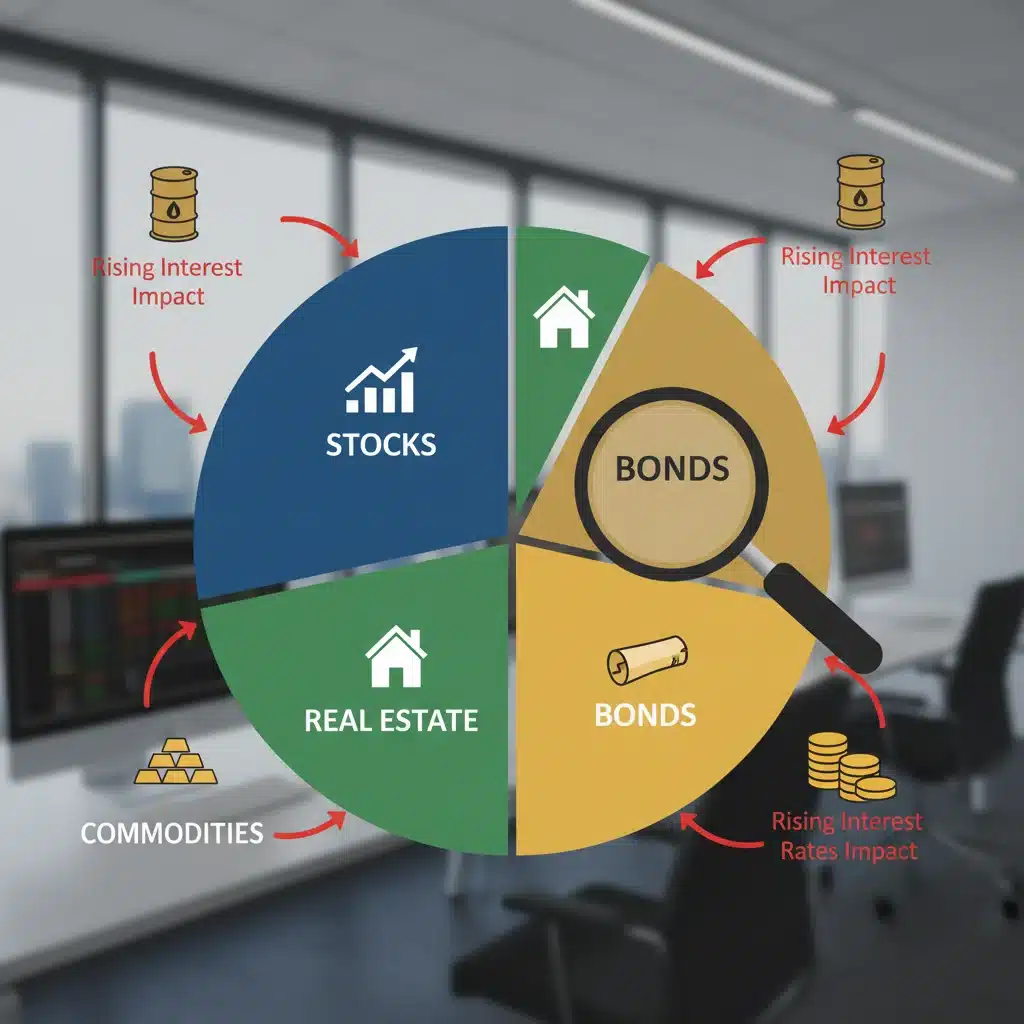
- Bonds: Bond prices generally have an inverse relationship with interest rates. As rates rise, newly issued bonds offer higher yields, making existing bonds with lower yields less attractive. This can lead to a decrease in the market value of existing bond holdings, particularly those with longer maturities. Investors focused on Fed Rate Hikes 2026 should consider the duration of their bond portfolios.
- Stocks: The impact on stocks is more nuanced. Higher interest rates can increase borrowing costs for companies, potentially reducing their profitability and making future earnings less valuable when discounted back to the present. Growth stocks, which often rely on future earnings potential, can be particularly vulnerable. However, certain sectors, like financial institutions (banks, insurers), may benefit from higher net interest margins.
- Real Estate: Rising mortgage rates can cool down the housing market by making homeownership less affordable, potentially impacting real estate valuations and demand. Commercial real estate can also be affected by higher financing costs and slower economic growth.
- Commodities: Commodities, such as gold and oil, can react differently. Gold is often seen as a hedge against inflation, but higher real interest rates (nominal rates minus inflation) can make non-yielding assets like gold less attractive compared to interest-bearing alternatives. Oil prices are more sensitive to global demand and supply dynamics, though a slowing economy due to rate hikes could reduce demand.
Understanding these historical tendencies provides a foundation for crafting a resilient investment strategy for the period leading up to and during potential Fed Rate Hikes 2026. It’s not about predicting the future with certainty, but rather preparing for various scenarios.
Strategic Adjustments for Your Investment Portfolio Ahead of 2026
Proactive portfolio management is key when anticipating significant economic shifts like potential Fed Rate Hikes 2026. Here are several strategies investors can consider to optimize their holdings:
1. Re-evaluating Your Fixed Income Portfolio
For bond investors, rising rates can be a significant concern. To mitigate the impact, consider:
- Shortening Duration: Bonds with shorter maturities are less sensitive to interest rate changes. Shifting towards short-term bonds or bond funds can reduce interest rate risk.
- Floating-Rate Securities: These bonds have interest payments that adjust periodically based on a benchmark rate, meaning their yields can increase as the Fed raises rates, protecting against capital depreciation.
- Inflation-Protected Securities (TIPS): While not directly tied to Fed hikes, TIPS can offer protection against inflation, which often prompts rate increases. Their principal value adjusts with the Consumer Price Index (CPI).
- Laddering Bonds: A bond ladder involves investing in bonds with staggered maturities. As shorter-term bonds mature, the proceeds can be reinvested into new, higher-yielding bonds, taking advantage of rising rates.
Careful consideration of your fixed income allocation is paramount as we approach Fed Rate Hikes 2026.
2. Optimizing Your Equity Holdings
The equity market’s response to rate hikes is complex, but certain adjustments can enhance resilience:
- Value Stocks vs. Growth Stocks: Growth stocks, with their valuations heavily dependent on future earnings, can be more vulnerable to higher discount rates. Value stocks, which are often more established companies with stable earnings and dividends, may perform relatively better.
- Sector Rotation: Certain sectors tend to perform better during rising rate environments. Financials (banks, insurance companies) often benefit from wider net interest margins. Healthcare and consumer staples can also be more defensive due to their essential nature, regardless of economic cycles. Energy and materials sectors might also see benefits if rate hikes are tied to strong economic growth or commodity price inflation.
- Dividend-Paying Stocks: Companies with strong balance sheets and consistent dividend payments can offer a degree of income stability, which becomes more appealing when bond yields are also rising.
- International Diversification: Different central banks may be on different monetary policy paths. Diversifying into international markets could offer opportunities in regions where interest rates are lower or economic growth is stronger.
A strategic review of your equity exposure is a smart move in anticipation of Fed Rate Hikes 2026.
3. Considering Alternative Investments
Alternative investments can provide diversification and potentially less correlation with traditional asset classes:
- Real Estate Investment Trusts (REITs): While direct real estate can be affected by higher mortgage rates, REITs can offer exposure to income-generating properties. However, their performance can be mixed, as they are sensitive to both interest rates and economic growth.
- Commodities: Depending on the underlying reasons for rate hikes (e.g., inflation), certain commodities like industrial metals or agricultural products might perform well. Gold’s role as an inflation hedge can be debated in a rising rate environment, but it often retains value during periods of market uncertainty.
- Private Equity and Debt: These illiquid investments often have different risk/return profiles and can offer diversification, though they typically require a higher net worth and longer investment horizons.
Exploring alternatives can be a sophisticated approach to preparing for Fed Rate Hikes 2026.
4. Managing Debt and Cash Reserves
Rising interest rates directly impact borrowing costs. It’s prudent to:
- Refinance Debt: If you have variable-rate debt (e.g., adjustable-rate mortgages, credit card balances), consider refinancing into fixed-rate options before rates climb significantly.
- Increase Cash Reserves: Holding adequate cash can provide liquidity for opportunistic investments during market downturns or to cover higher expenses. Higher interest rates also mean better yields on savings accounts and money market funds.
- Debt Reduction: Prioritizing paying down high-interest debt becomes even more financially advantageous in a rising rate environment.
Effective debt and cash management are foundational elements for navigating Fed Rate Hikes 2026.
Understanding the Broader Economic Context for 2026
The Federal Reserve’s decisions on interest rates are not made in a vacuum. They are a response to the prevailing economic conditions and the Fed’s outlook for the future. As we consider potential Fed Rate Hikes 2026, it’s vital to monitor several key economic indicators:
- Inflation: Persistent high inflation is the most common trigger for rate hikes. The Fed targets an average inflation rate of 2%. If inflation remains stubbornly above this target, or if inflationary pressures re-emerge, rate hikes become more likely.
- Employment Data: A strong labor market, characterized by low unemployment and rising wages, can signal an economy operating at or above its potential, potentially leading to inflationary pressures and prompting the Fed to tighten monetary policy.
- GDP Growth: Robust economic growth can also contribute to inflationary pressures. Conversely, signs of an economic slowdown might cause the Fed to pause or even reverse its tightening stance.
- Global Economic Conditions: International events, such as geopolitical tensions, supply chain disruptions, or economic slowdowns in major trading partners, can influence the Fed’s decisions. For instance, a global recession could limit the Fed’s ability to raise rates aggressively.
- Fiscal Policy: Government spending and taxation policies (fiscal policy) can also impact the economy and, by extension, the Fed’s monetary policy. Large fiscal stimulus, for example, could be inflationary, potentially necessitating a more aggressive Fed response.
Staying informed about these macroeconomic trends will provide crucial context for understanding the likelihood and implications of Fed Rate Hikes 2026.
Long-Term Perspective and Diversification
While preparing for specific events like Fed Rate Hikes 2026 is important, it’s equally crucial to maintain a long-term investment perspective and adhere to the principles of diversification. Market fluctuations are an inherent part of investing, and trying to perfectly time the market is often a futile exercise. A well-diversified portfolio, spread across various asset classes, geographies, and industries, is inherently more resilient to individual economic shocks or sector-specific downturns. Regularly rebalancing your portfolio to maintain your desired asset allocation can help ensure you’re not overexposed to any one area that might be particularly vulnerable to rising rates.
Moreover, consider your personal financial goals and risk tolerance. A younger investor with a long time horizon might be able to withstand more volatility than someone nearing retirement. Your investment strategy should always be tailored to your individual circumstances, and any adjustments made in response to potential Fed Rate Hikes 2026 should align with your broader financial plan.
The Role of Professional Advice
Navigating the complexities of monetary policy and its impact on your investment portfolio can be challenging. For many investors, seeking guidance from a qualified financial advisor can be invaluable. A professional can help you:
- Assess Your Current Portfolio: Evaluate your existing asset allocation and identify areas of potential vulnerability or opportunity related to Fed Rate Hikes 2026.
- Tailor Strategies: Develop a personalized investment strategy that aligns with your financial goals, risk tolerance, and time horizon.
- Stay Informed: Provide ongoing insights into economic developments and their potential impact on your investments.
- Emotional Discipline: Help you avoid impulsive decisions driven by market fear or euphoria.
Even if you prefer a self-directed approach, consulting with an advisor for a periodic review of your strategy is a prudent step, especially during periods of anticipated economic change.

Conclusion: Proactive Planning for a Resilient Portfolio
The prospect of Fed Rate Hikes 2026 is a significant consideration for all investors. While the exact trajectory of interest rates remains uncertain, a proactive and informed approach to portfolio management can significantly enhance your financial resilience. By understanding the Fed’s role, the historical impact of rate changes, and implementing strategic adjustments to your fixed income, equity, and alternative investment allocations, you can position your portfolio to not only withstand potential challenges but also to seize emerging opportunities.
Remember that diversification, a long-term perspective, and disciplined rebalancing are timeless principles that serve as the bedrock of successful investing. Combine these with a keen eye on macroeconomic indicators and, if necessary, professional financial guidance, and you will be well-equipped to navigate the evolving economic landscape towards 2026 and beyond. The future of your financial well-being hinges on today’s preparedness.