
The 2026 Housing Market Forecast: Why Mortgage Rates at 7.2% Demand a New Investment Approach
Anúncios
The real estate landscape is perpetually in motion, a dynamic ecosystem influenced by a myriad of economic, social, and political factors. As we cast our gaze towards the 2026 housing market, one particular forecast stands out with significant implications for both prospective homeowners and seasoned investors: a projected mortgage rate of 7.2%. This figure, while not unprecedented in historical context, represents a substantial shift from the ultra-low rates experienced in recent years, demanding a complete re-evaluation of traditional investment strategies and homeownership aspirations. Understanding the intricacies of this forecast is not merely an academic exercise; it is an essential prerequisite for informed decision-making in what promises to be a challenging yet potentially rewarding era for real estate.
The purpose of this comprehensive article is to dissect the 2026 housing market forecast, particularly through the lens of a 7.2% mortgage rate. We will delve into the underlying economic forces driving these rates, analyze their profound impact on affordability and demand, and, crucially, explore innovative investment approaches that can thrive in such an environment. From understanding the macroeconomic indicators to identifying niche market opportunities, this guide aims to equip you with the knowledge and foresight necessary to navigate the complexities of the future real estate landscape. Whether you are a first-time buyer, a seasoned investor, or simply curious about the future of housing, preparing for a 7.2% mortgage rate is paramount.
Anúncios
Understanding the Economic Drivers Behind 7.2% Mortgage Rates in the 2026 Housing Market
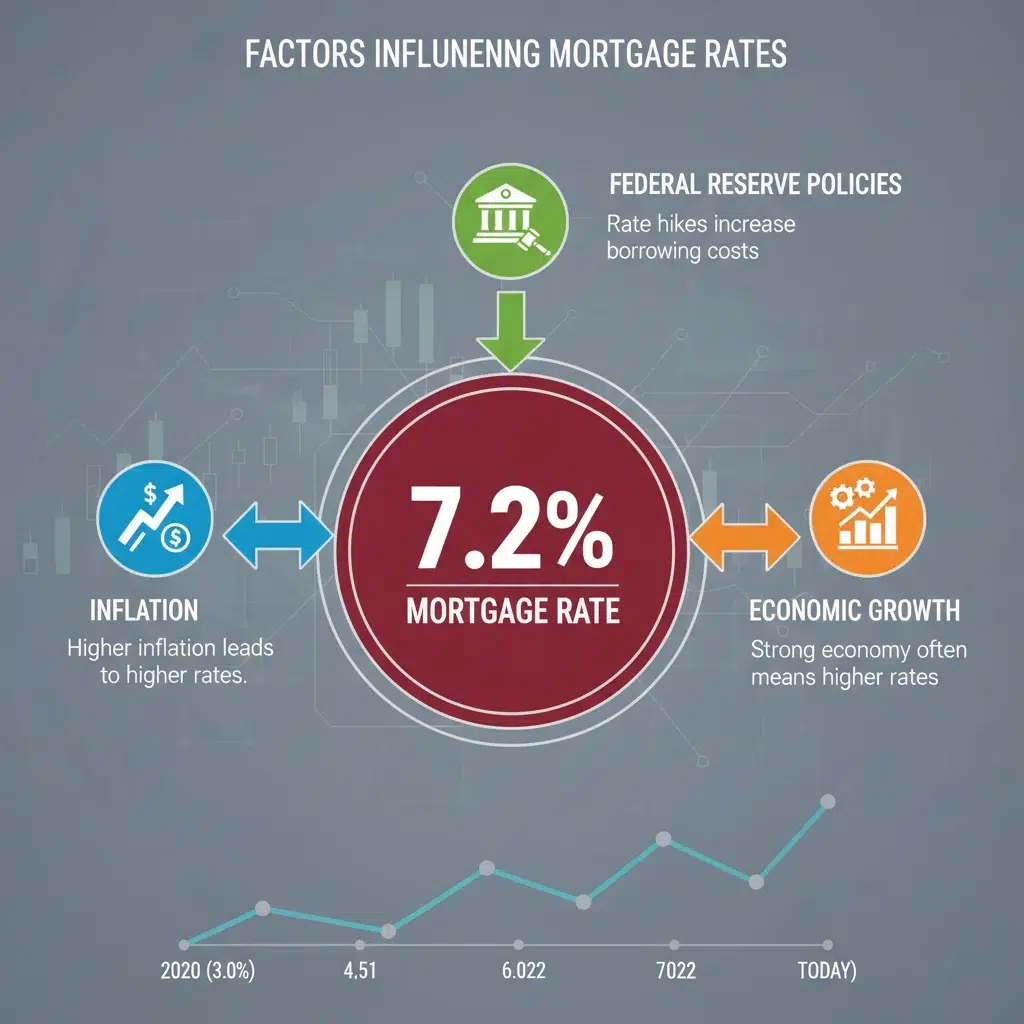
To truly grasp the implications of a 7.2% mortgage rate in the 2026 housing market, we must first understand the economic machinery that propels such figures. Mortgage rates are not arbitrary numbers; they are a direct reflection of broader economic conditions, primarily influenced by inflation, Federal Reserve policy, and the bond market. The projected 7.2% rate for 2026 suggests a confluence of these factors creating an upward pressure on borrowing costs.
Inflationary Pressures and Federal Reserve Policy
One of the primary antagonists of low mortgage rates is inflation. When the cost of goods and services rises, the purchasing power of money decreases. To combat persistent inflation, central banks, like the Federal Reserve in the United States, typically raise benchmark interest rates. These rate hikes aim to cool down the economy by making borrowing more expensive, thereby reducing demand and theoretically bringing inflation back to target levels. A sustained period of elevated inflation leading into 2026 would almost certainly necessitate a hawkish stance from the Federal Reserve, pushing up the federal funds rate, which in turn directly influences mortgage rates.
The relationship is not always immediate or one-to-one, but the direction is clear. If the Fed continues to prioritize inflation control over economic growth stimulation, the 2026 housing market will feel the reverberations in the form of higher mortgage rates. The market anticipates these moves, often pricing them in well in advance, contributing to the forward-looking nature of our 7.2% forecast.
The Role of the Bond Market
Mortgage rates are closely tied to the yield on the 10-year Treasury bond. This is because mortgage-backed securities (MBS) often compete with Treasury bonds for investor dollars. When Treasury yields rise, MBS must offer higher yields to attract investors, which translates to higher mortgage rates for consumers. Several factors can influence bond yields, including:
- Economic Growth Expectations: Strong economic growth often leads to higher bond yields as investors anticipate greater returns elsewhere and demand more compensation for holding ‘safe’ government debt.
- Government Debt Levels: Increased government borrowing to finance deficits can flood the market with bonds, potentially pushing down prices and increasing yields.
- Global Economic Conditions: International capital flows and geopolitical events can also impact the demand for U.S. Treasury bonds, thereby affecting yields.
For the 2026 housing market to see 7.2% mortgage rates, it implies that the bond market anticipates continued inflationary pressures, potentially coupled with robust economic activity or significant government borrowing, all contributing to an environment of higher interest rates across the board.
Supply and Demand Dynamics in the Mortgage Market
While less direct than inflation or bond yields, the supply and demand for mortgage capital also play a role. If there’s high demand for mortgages but a limited supply of capital from lenders (perhaps due to stricter lending standards or a tighter financial market), rates can increase. Conversely, an abundance of capital and low demand could push rates down. However, in an environment where the Federal Reserve is actively trying to tighten monetary policy, the supply of capital tends to contract, further supporting the forecast of higher rates for the 2026 housing market.
In essence, the 7.2% mortgage rate forecast for 2026 is a complex interplay of macroeconomic forces. It signals a potential future where inflation remains a concern, central banks maintain a firm hand on monetary policy, and the bond market adjusts to these realities. Understanding these drivers is the first step in formulating effective strategies to navigate the evolving real estate landscape.
Impact on Affordability and Demand in the 2026 Housing Market
A 7.2% mortgage rate is not just a number; it’s a financial barrier with significant repercussions for affordability and demand within the 2026 housing market. The direct consequence is a substantial increase in monthly mortgage payments, which inevitably reduces the purchasing power of potential buyers. This ripple effect will reshape who can afford to buy, what they can afford, and where they choose to live.
Reduced Purchasing Power and Affordability Crisis
Let’s put 7.2% into perspective. Compared to the historically low rates seen during the pandemic (e.g., 3-4%), a 7.2% rate can increase a monthly mortgage payment by hundreds, if not over a thousand, dollars for the same loan amount. For example, on a $400,000 loan, the difference between a 3% and a 7.2% interest rate can mean an additional $900-$1000 per month in payments. This significant jump means that many aspiring homeowners will find themselves priced out of markets they once considered accessible.
First-time homebuyers, often with less accumulated wealth and smaller down payments, will be particularly vulnerable. The dream of homeownership may become more distant, leading to a prolonged period of renting. Even for existing homeowners looking to upgrade, the higher rates could lock them into their current homes, as selling and buying at a higher rate would significantly increase their monthly housing costs. This dynamic could lead to reduced inventory in some segments of the 2026 housing market, even as overall demand softens.
Shift in Buyer Demographics and Market Segmentation
The demographic profile of buyers in the 2026 housing market is likely to shift. We may see a greater proportion of cash buyers or those with substantial equity from previous home sales dominating the market. Investors with access to alternative financing or those focused on rental income streams might find new opportunities, while traditional owner-occupant buyers relying heavily on mortgages will face tougher competition and higher entry barriers.
Furthermore, the demand for different types of housing will likely evolve. Smaller, more affordable homes, or properties in less competitive, suburban, or rural areas, might see increased interest as buyers seek to mitigate the impact of higher monthly payments. Conversely, demand for luxury homes or properties in highly sought-after urban centers, while still robust among the affluent, might experience a slowdown in price appreciation as the pool of eligible buyers shrinks. This segmentation will require a nuanced approach from developers and real estate professionals.
Regional Disparities and Migration Patterns
The impact of 7.2% mortgage rates will not be uniform across all regions. Areas with already high home prices and high property taxes will experience a more pronounced affordability crisis. This could accelerate existing migration patterns, with people moving from expensive coastal cities to more affordable inland or Southern states. The 2026 housing market might see a resurgence of ‘secondary’ cities and towns as attractive alternatives, offering a better quality of life and lower housing costs, even with higher interest rates.
Local economies heavily reliant on real estate transactions could face headwinds. Less home buying activity means fewer commissions for agents, less work for contractors, and reduced revenue from property taxes. Policymakers at the local and state levels will need to consider these implications and potentially explore programs to support affordable housing or stimulate economic activity in other sectors.
The Rental Market Response
As homeownership becomes less accessible, demand for rental properties will almost certainly increase. This could lead to upward pressure on rental prices, making housing affordability a broader societal challenge. For real estate investors, this presents a dual-edged sword: while higher rental demand offers potential for increased income, the cost of acquiring new properties with 7.2% mortgages will also be higher. Strategic investment in rental properties, particularly in growth areas, could be a key theme in the 2026 housing market.
In summary, the 7.2% mortgage rate will fundamentally alter the dynamics of the 2026 housing market. Affordability will be severely tested, leading to shifts in buyer behavior, market segmentation, and potentially accelerating regional demographic changes. Understanding these impacts is crucial for anyone looking to engage with real estate in the coming years.
Strategic Investment Approaches for the 2026 Housing Market
Given the forecast of 7.2% mortgage rates, traditional ‘buy and hold’ strategies, particularly for highly leveraged properties, may need significant adjustment in the 2026 housing market. Investors will need to be more agile, creative, and data-driven to identify and capitalize on opportunities. A new investment approach is not just recommended; it’s essential for sustained success.
Focus on Cash Flow and Cap Rates
When interest rates are high, the emphasis shifts from rapid appreciation to consistent cash flow. Investors should prioritize properties that generate strong rental income relative to their purchase price and operating expenses. This means a renewed focus on capitalization rates (cap rates), which measure the rate of return on a real estate investment property based on the income that the property is expected to generate. A higher cap rate generally indicates a better investment, assuming all other factors are equal.
- Multi-family properties: These can offer more stable cash flow and diversified tenant risk compared to single-family homes.
- Affordable housing: With increased demand for rentals, properties catering to lower and middle-income tenants might see consistent occupancy and rental growth.
- Niche markets: Student housing, senior living, or short-term rentals in specific tourist destinations could offer attractive cap rates if managed effectively.
Detailed financial analysis, including stress testing for vacancies and unexpected expenses, will be paramount in the 2026 housing market.
Explore Alternative Financing and Debt Restructuring
The 7.2% mortgage rate might push investors to look beyond conventional fixed-rate mortgages. Options could include:
- Seller financing: If a seller is motivated, they might be willing to finance a portion of the purchase, potentially at a more favorable rate or with more flexible terms than a traditional lender.
- Assumable mortgages: While rare, if an existing mortgage has a significantly lower rate, assuming it could be a massive advantage. Due diligence is key here.
- Private lending and hard money loans: For short-term projects or unique opportunities, these can offer quick capital, albeit often at higher rates. The key is to have a clear exit strategy.
- Debt restructuring and refinancing: For existing portfolios, constantly evaluating opportunities to refinance if rates drop in the future will be crucial.
Understanding the nuances of each financing option will be critical for navigating the 2026 housing market effectively.
Geographic Diversification and Emerging Markets
As discussed, higher rates will exacerbate regional disparities. Investors should look beyond traditional hot markets and identify emerging areas with strong economic fundamentals, population growth, and relative affordability. These could include:
- Sun Belt states: Continued migration to the South and Southwest for job opportunities and lower cost of living.
- Secondary and tertiary cities: Areas experiencing revitalization or attracting new industries.
- Inland markets: Often more insulated from the extreme price fluctuations of coastal cities.
Thorough market research, including local job growth, demographic shifts, and infrastructure development, will be essential for identifying these opportunities in the 2026 housing market.
Value-Add Strategies and Property Enhancement
In a market where price appreciation is subdued, creating value through property enhancement becomes even more important. This could involve:
- Renovations and upgrades: Modernizing older properties to command higher rents or sale prices.
- Repositioning assets: Converting commercial spaces to residential, or improving the utility of existing properties.
- Efficient property management: Maximizing occupancy, minimizing expenses, and providing excellent tenant services to retain residents and justify rent increases.
These strategies allow investors to generate returns even if the overall market isn’t experiencing rapid growth, making them particularly relevant for the 2026 housing market.
Real Estate Investment Trusts (REITs) and Syndications
For those who prefer a more passive approach or want to diversify without direct property ownership, REITs and real estate syndications offer viable alternatives. REITs allow investors to buy shares in companies that own income-producing real estate across various sectors. Syndications pool investor capital for specific projects, offering access to larger deals that might otherwise be out of reach.
These vehicles can provide exposure to real estate without the burden of direct management and can offer liquidity and diversification benefits, which are valuable in a volatile 2026 housing market.
Hedging and Risk Management
In an environment of higher interest rates and potential market volatility, robust risk management is crucial. This includes:
- Diversification: Spreading investments across different property types, geographies, and asset classes.
- Conservative underwriting: Building in buffers for vacancies, maintenance, and potential interest rate fluctuations.
- Contingency planning: Having reserves for unexpected events or market downturns.
The 2026 housing market will reward those who are not only opportunistic but also prudent in their risk assessment and management.

By adopting these strategic investment approaches, investors can not only mitigate the challenges posed by 7.2% mortgage rates but also uncover significant opportunities in the evolving 2026 housing market.
Navigating the 2026 Housing Market as a Homebuyer
For prospective homebuyers, the 2026 housing market with 7.2% mortgage rates presents a different set of challenges and opportunities compared to investors. The focus shifts from maximizing returns to achieving homeownership goals sustainably. Adapting strategies to this new reality is crucial for making informed and successful purchasing decisions.
Rethinking Affordability and Budgeting
The most immediate impact for homebuyers will be on affordability. A 7.2% mortgage rate significantly increases monthly payments, meaning buyers will likely need to adjust their expectations regarding home size, location, or features. It’s imperative to:
- Re-evaluate budgets: Conduct a thorough assessment of your financial capacity, considering all monthly expenses beyond just the mortgage payment (property taxes, insurance, utilities, maintenance).
- Increase down payments: A larger down payment reduces the loan amount, thereby mitigating the impact of higher interest rates on monthly payments. Saving more aggressively now can pay significant dividends in 2026.
- Consider adjustable-rate mortgages (ARMs) with caution: While ARMs might offer lower initial rates, the potential for future rate increases poses a substantial risk. They might be suitable for buyers with a clear plan to sell or refinance within the initial fixed period, but require careful consideration.
The key is to be realistic about what you can truly afford, rather than stretching your budget to its breaking point, especially in the 2026 housing market.
Exploring Different Market Segments and Locations
Just as with investors, homebuyers will benefit from looking beyond the most competitive markets. The 2026 housing market may see increased interest in:
- Smaller homes or starter homes: These will remain more accessible in a high-rate environment.
- Less saturated neighborhoods: Areas slightly outside prime locations might offer better value for money.
- Up-and-coming communities: Research areas with planned infrastructure development, job growth, and improving amenities that could appreciate in value over the long term.
- Condos or townhouses: These property types often have a lower entry price point than single-family homes, making them a more feasible option for many buyers.
Flexibility on location and property type will be a significant advantage in the 2026 housing market.
Leveraging First-Time Homebuyer Programs and Assistance
Government-backed and local assistance programs can be invaluable, especially for first-time homebuyers facing higher rates. These programs often include:
- Down payment assistance: Grants or low-interest loans to help cover the initial costs.
- FHA, VA, and USDA loans: These offer more lenient qualification requirements, lower down payments, and sometimes more favorable interest rates for eligible buyers.
- Tax credits: Some programs offer tax benefits that can reduce the overall cost of homeownership.
Researching and understanding the eligibility requirements for these programs should be a priority for anyone planning to buy in the 2026 housing market.
Prioritizing Financial Health and Credit Scores
In a higher interest rate environment, lenders become more stringent. A strong financial profile will be crucial for securing the best possible mortgage terms. This means:
- Improving credit scores: A higher credit score can translate to a lower interest rate, even if only by a fraction of a percentage, which can save tens of thousands of dollars over the life of a loan.
- Reducing debt-to-income ratio: Paying down existing debts will make you a more attractive borrower.
- Building a robust emergency fund: Having several months’ worth of living expenses saved provides a buffer against unexpected financial challenges.
Preparation is key, and starting to build a strong financial foundation now will be instrumental for success in the 2026 housing market.
Patience and Long-Term Perspective
The 2026 housing market, characterized by 7.2% mortgage rates, might not be the market for quick gains or impulsive decisions. Buyers should adopt a patient, long-term perspective. Real estate is a cyclical asset, and while rates may be high now, economic conditions can change. Focusing on finding a home that meets your needs and is affordable over the long haul, rather than trying to time the market perfectly, is a more sustainable approach.
For homebuyers, the 2026 housing market demands careful planning, financial discipline, and a willingness to adapt. By focusing on affordability, exploring diverse options, and leveraging available assistance, homeownership remains an achievable goal, even with higher borrowing costs.
Conclusion: Adapting to the New Real Estate Paradigm of the 2026 Housing Market
The forecast of a 7.2% mortgage rate for the 2026 housing market signals a significant shift in the real estate paradigm. The era of ultra-low interest rates, which fueled rapid price appreciation and made borrowing exceptionally cheap, appears to be behind us. This new environment demands a strategic recalibration from all participants, whether they are aspiring homeowners or seasoned investors.
For investors, the focus must move beyond speculative appreciation towards sustainable cash flow, value creation, and diversified portfolios. Exploring alternative financing, identifying undervalued emerging markets, and employing rigorous risk management will be the hallmarks of successful strategies. The emphasis will be on properties that generate consistent income and offer opportunities for enhancement, rather than simply banking on market-wide price surges.
Homebuyers, on the other hand, will need to embrace a more disciplined and flexible approach. Realistic budgeting, increased savings for down payments, and a willingness to explore a broader range of locations and property types will be crucial. Leveraging first-time homebuyer programs and meticulously managing personal finances will empower individuals to achieve their homeownership dreams, even amidst higher borrowing costs.
The 2026 housing market, while presenting challenges, is not without its opportunities. Higher rates may cool down overheated markets, potentially reducing competition and bringing prices back to more sustainable levels in some areas. This could create entry points for patient and well-prepared buyers and investors. However, success will hinge on informed decision-making, adaptability, and a deep understanding of the underlying economic forces at play.
In essence, the 2026 housing market will be defined by resilience and strategic foresight. Those who proactively analyze the economic drivers, understand the impact on affordability and demand, and implement innovative investment and buying approaches will be best positioned to thrive. The landscape is changing, and with it, the rules of engagement. By embracing this new reality, participants can navigate the complexities and emerge victorious in the evolving world of real estate.


