US Housing Market Update: Median Home Prices Drop 2% in January 2026 – What’s Next?
Anúncios
US Housing Market Update: Median Home Prices See 2% Decline in January 2026, What’s Next?
Anúncios
The landscape of the US housing market is in constant flux, a dynamic ecosystem influenced by a myriad of economic, social, and political factors. As we delve into the early data for 2026, a significant shift has emerged: median home prices across the United States experienced a notable 2% decline in January. This downturn, while seemingly modest, has sent ripples through the real estate industry, prompting questions from prospective buyers, current homeowners, investors, and industry analysts alike. What does this dip truly signify? Is it a temporary blip, a market correction, or the precursor to a more substantial trend? Understanding the nuances of this development is crucial for anyone involved in or impacted by the housing sector.
For years, the US housing market has been characterized by robust growth, often defying predictions of slowdowns. Record-low interest rates, a surge in demand fueled by remote work, and limited inventory created a seller’s paradise. However, the economic environment has been evolving. Inflationary pressures, adjustments in interest rate policies by the Federal Reserve, and a gradual recalibration of supply and demand dynamics have been brewing beneath the surface. The 2% decline in January 2026 median home prices could be seen as a manifestation of these underlying shifts, a moment where the market begins to digest and respond to the broader economic climate.
Anúncios
This article aims to provide a comprehensive analysis of the current state of the US housing market, focusing on the recent price decline. We will explore the potential causes behind this shift, examine its implications for various stakeholders, and, most importantly, look ahead to what the remainder of 2026 might hold. Whether you’re contemplating buying your first home, selling an existing property, or simply trying to understand the economic indicators, this deep dive into the housing market’s latest movements will offer valuable insights and guidance.
Understanding the January 2026 Price Decline: A Deeper Look at the US Housing Market
The 2% drop in median home prices in January 2026 is more than just a number; it’s a symptom of complex interactions within the broader economic framework. To truly grasp its significance, we must dissect the factors that likely contributed to this change. Several key elements are at play, each exerting its own gravitational pull on the US housing market.
Interest Rate Fluctuations and Their Impact
One of the most significant drivers of housing affordability and demand is interest rates. Throughout 2025, the Federal Reserve continued its efforts to combat inflation, leading to a series of interest rate hikes. While these increases were often incremental, their cumulative effect has been substantial. Higher mortgage rates translate directly into higher monthly payments for homebuyers, significantly impacting their purchasing power. For many, even a slight increase in rates can push homeownership out of reach or force them to consider less expensive properties.
The consistent upward pressure on interest rates likely cooled demand in late 2025, with January 2026 reflecting the lagged effects of these policy decisions. As borrowing becomes more expensive, the pool of eligible buyers shrinks, and those who remain are often more cautious, leading to a softening of competitive bidding and, consequently, a moderation of prices. This relationship between interest rates and home prices is a fundamental principle of the US housing market, and the recent decline underscores its enduring importance.
Inflationary Pressures and Consumer Confidence
Persistent inflation, while showing signs of easing, has eroded consumer purchasing power across various sectors, including housing. When the cost of everyday goods and services rises, households have less discretionary income available for large investments like a home down payment or higher mortgage payments. This economic squeeze can lead to a decrease in overall consumer confidence regarding major financial commitments.
Furthermore, inflation affects construction costs, which can then influence new home prices. However, if buyers are hesitant due to economic uncertainty, even rising construction costs might not translate into higher sales prices for new builds, as developers may opt to absorb some costs or slow down new projects to avoid unsold inventory. The interplay between inflation, consumer sentiment, and housing demand is intricate, and the January price decline suggests that consumers are exercising more caution in the current economic climate.
Inventory Levels and Supply-Demand Dynamics
For several years, a significant shortage of housing inventory was a primary factor driving up prices in the US housing market. Limited supply coupled with robust demand created intense competition among buyers. However, recent data suggests a gradual increase in inventory levels in various regions. This could be due to several reasons: fewer homeowners willing to refinance at higher rates, thus staying put; a slight increase in new construction completions; or a decrease in buyer demand leading to properties staying on the market longer.
Even a modest increase in available homes can shift the balance of power from sellers to buyers. When buyers have more options, they are less likely to engage in bidding wars and are in a stronger position to negotiate prices. The 2% decline in median prices could indicate that the market is moving closer to a more balanced state, where supply and demand are less skewed in favor of sellers. This rebalancing is a critical aspect of a healthy and sustainable US housing market.
Regional Variances and Local Market Conditions
It’s crucial to remember that the US housing market is not a monolith. While national statistics provide a broad overview, local market conditions can vary dramatically. A 2% national decline might mask steeper drops in some areas and continued stability or even slight gains in others. Factors such as local job growth, population shifts, property tax rates, and the availability of specific types of housing (e.g., single-family homes vs. condos) all play a significant role in determining regional price trends.
For instance, tech hubs that experienced rapid price appreciation during the pandemic might be more susceptible to corrections if their industries face layoffs or a slowdown. Conversely, more affordable markets with strong fundamentals might see continued, albeit slower, growth. A comprehensive understanding of the January 2026 decline requires acknowledging these regional disparities and looking beyond the national average to specific metropolitan and suburban areas.
Who Benefits and Who is Impacted by the Price Decline?
A shift in the US housing market, particularly a price decline, creates winners and losers, or at least different strategic considerations for various stakeholders. Understanding these impacts is key to navigating the current environment effectively.
For Prospective Homebuyers: A Glimmer of Hope?
For potential homebuyers, especially first-time buyers who have been priced out of the market for years, a 2% decline in median home prices could be seen as a cautious glimmer of hope. While 2% might not drastically reduce monthly mortgage payments, it signals a potential shift towards a more buyer-friendly market. Lower prices, combined with potentially less competition, could offer a window of opportunity.
However, this benefit is somewhat tempered by higher interest rates. The lower purchase price might be offset by a higher cost of borrowing. Prospective buyers should focus on their overall monthly budget and consider the total cost of ownership. This period might also encourage sellers to be more flexible with negotiations, offering concessions or accepting offers closer to asking price, which could benefit buyers further. This is a crucial time for buyers to get their finances in order, secure pre-approvals, and be ready to act when the right opportunity arises in the US housing market.
For Current Homeowners: Assessing Equity and Future Plans
Current homeowners might view a price decline with a mix of concern and pragmatism. For those who purchased their homes recently at peak prices, a 2% drop could mean a slight reduction in their home equity. However, for long-term homeowners who have seen significant appreciation over many years, a small correction is unlikely to erase substantial gains.
The primary impact for homeowners contemplating selling might be a recalibration of their expectations. They might need to adjust their asking prices to align with current market realities and be prepared for properties to spend a little longer on the market. For those not planning to sell, the decline is largely theoretical, affecting their paper wealth but not their day-to-day finances. This period emphasizes the importance of understanding local market conditions rather than relying solely on national averages for personal financial planning within the US housing market.
For Real Estate Investors: Strategic Opportunities and Risks
Real estate investors, particularly those with a long-term perspective, might see the current market as an opportunity. A 2% decline could make certain properties more attractive, especially if they believe the market will rebound or if they are looking for distressed assets. Investors focused on rental properties might find that stable or rising rental yields, combined with slightly lower purchase prices, improve their cap rates.
However, investors also face risks. A continued downward trend could lead to further erosion of asset values. Higher interest rates also impact investors who rely on financing for their acquisitions. Careful due diligence, a thorough understanding of local rental demand, and a robust financial strategy are more critical than ever for investors navigating the evolving US housing market.
For Real Estate Professionals: Adapting Strategies
Real estate agents, brokers, and mortgage lenders must adapt their strategies to this changing environment. For agents, it means becoming even more adept at pricing homes accurately, marketing effectively to a potentially smaller pool of buyers, and honing negotiation skills. For lenders, it involves guiding clients through a higher interest rate environment and finding suitable financing options.
Education and communication with clients are paramount. Professionals who can clearly explain market trends, manage expectations, and offer strategic advice will be the most successful. This period highlights the need for expertise and adaptability in the real estate industry, reinforcing the value of experienced professionals in the US housing market.
What’s Next for the US Housing Market in 2026?
Predicting the future of the US housing market is inherently challenging, given the multitude of variables at play. However, based on current economic indicators and historical patterns, we can outline several potential scenarios and key trends to watch throughout 2026.
Continued Moderation or Stabilization
One likely scenario is a continued moderation or stabilization of home prices. A 2% decline is not a crash; it’s a correction. It suggests that the rapid appreciation seen in previous years is unsustainable and that the market is finding a more equilibrium point. We might see further slight declines in some months, offset by minor gains in others, leading to a relatively flat or slightly negative annual growth rate for 2026.
This moderation would be a healthy development for the overall US housing market, making homeownership more attainable for a broader segment of the population without a drastic collapse in values that could trigger broader economic instability. This scenario depends heavily on the Federal Reserve’s monetary policy and the trajectory of inflation.
Interest Rate Trajectory: The Fed’s Next Moves
The direction of interest rates will continue to be a dominant factor. If inflation continues to cool, the Federal Reserve might pause or even begin to cut interest rates later in 2026. A reduction in interest rates would significantly boost buyer affordability and could inject new life into the US housing market, potentially leading to a stabilization or even a slight rebound in prices towards the end of the year.
Conversely, if inflation proves more stubborn, the Fed might be compelled to maintain higher rates for longer, which would continue to suppress demand and could lead to further, albeit gradual, price adjustments. Monitoring the Fed’s statements and economic data releases will be crucial for anticipating shifts in the housing market.
Inventory Levels: A Gradual Increase
We can expect inventory levels to continue their gradual increase throughout 2026. This will be driven by a combination of factors: new construction catching up to demand in some areas, fewer homeowners being incentivized to sell and buy another home at higher rates, and potentially some homeowners needing to sell due to life changes or economic pressures. A healthier inventory level provides more choices for buyers and helps prevent extreme price fluctuations, contributing to a more balanced US housing market.
However, it’s unlikely we will see a massive glut of inventory, as demographic trends and a historical underbuilding problem still suggest underlying demand. The increase will likely be steady rather than sudden, allowing the market to absorb new listings without overwhelming it.
Economic Growth and Job Market Strength
The overall health of the US economy and the strength of the job market will always be foundational to the housing sector. A robust job market, with low unemployment and wage growth, supports consumer confidence and the ability of individuals to afford homeownership. Even with higher interest rates, stable employment provides the income necessary to qualify for mortgages and make payments.
Any significant economic downturn or widespread job losses could exacerbate a housing market slowdown. Conversely, sustained economic growth would act as a stabilizing force. The US housing market is deeply intertwined with the national economy, and its trajectory will largely mirror broader economic performance.
Affordability Crisis: Long-Term Solutions
Even with a 2% decline, affordability remains a significant challenge in many parts of the US housing market. The long-term trend of rising housing costs, outstripping wage growth, has created a structural issue. In 2026, we might see increased focus on policy solutions aimed at improving affordability, such as incentives for affordable housing development, zoning reforms, and first-time homebuyer assistance programs.
These long-term solutions are critical for ensuring a healthy and equitable housing market for future generations. While they may not immediately impact short-term price fluctuations, their development and implementation will be important indicators for the sustained health of the US housing market.
Navigating the Evolving US Housing Market: Tips for Stakeholders
Given the current shifts and anticipated trends, various stakeholders need to adopt strategic approaches to navigate the evolving US housing market effectively.
For Buyers: Patience and Preparation are Key
If you’re a prospective homebuyer, this period calls for a blend of patience and proactive preparation. Do not rush into decisions, but be ready to act when the right opportunity arises.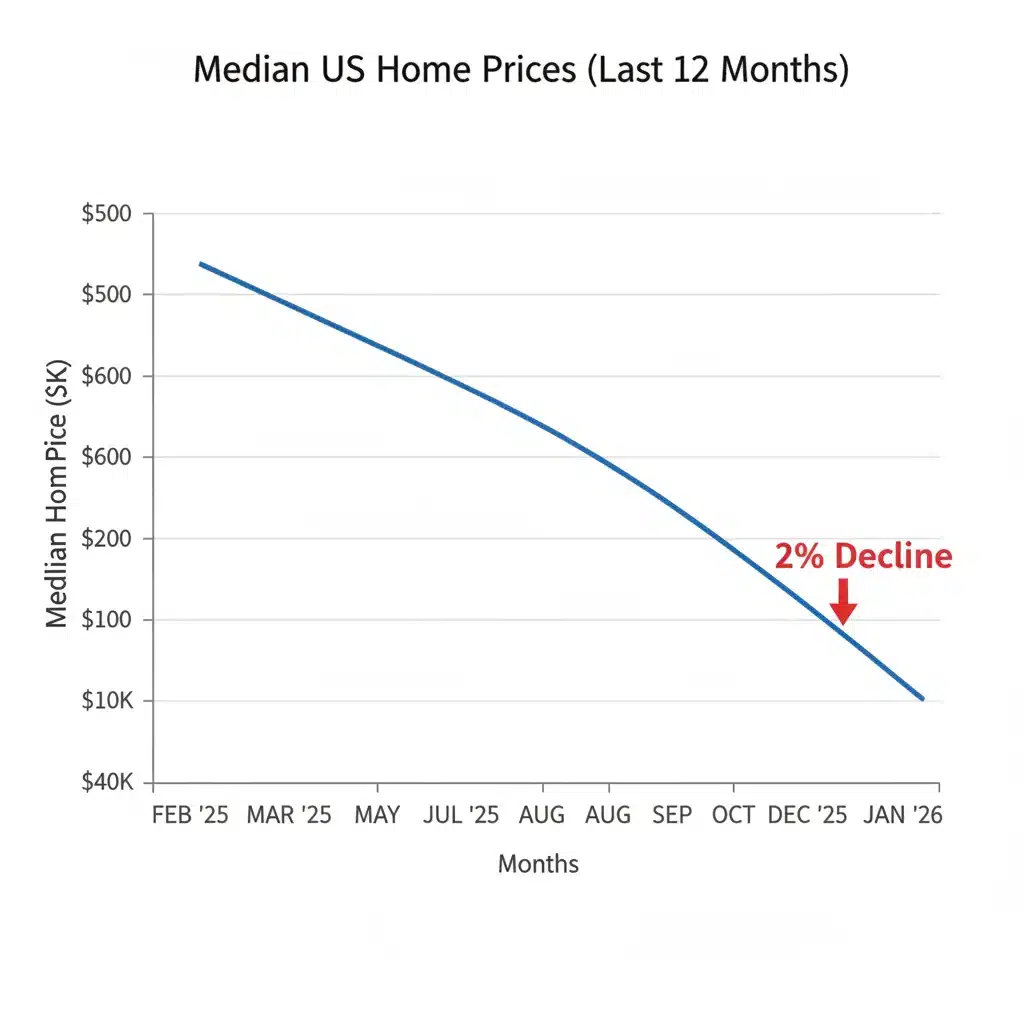
- Strengthen Your Financial Position: Focus on improving your credit score, saving for a larger down payment, and minimizing other debts. A stronger financial profile will give you more leverage and better mortgage terms.
- Get Pre-Approved: Understand exactly how much home you can afford at current interest rates. A pre-approval letter makes you a serious buyer in the eyes of sellers.
- Research Local Markets: National averages don’t tell the whole story. Research specific neighborhoods and cities to understand local price trends, inventory, and competition.
- Be Realistic: While prices are down slightly, don’t expect a massive crash. Focus on finding a home that meets your needs and budget, and be prepared to negotiate.
- Work with an Experienced Agent: A local real estate agent who understands the nuances of your desired market can be invaluable in finding properties and negotiating effectively.
For Sellers: Strategic Pricing and Presentation
Sellers need to adjust their expectations from the peak market conditions of previous years. Strategic pricing and excellent presentation are more critical than ever.
- Price Competitively: Overpricing your home in a moderating market can lead to it sitting on the market longer, eventually requiring price reductions that can make buyers wary. Work with your agent to set a realistic, competitive price from the outset.
- Enhance Curb Appeal and Staging: First impressions matter. Invest in minor repairs, decluttering, and staging to make your home as appealing as possible to a broader range of buyers.
- Be Flexible: Be open to negotiations on price, contingencies, and closing dates. A bit of flexibility can make the difference in securing a sale.
- Highlight Unique Features: Emphasize any energy-efficient upgrades, smart home technology, or unique architectural details that differentiate your property.
- Consider Timing: If you have flexibility, observe local market trends. Sometimes waiting for a slight uptick in buyer activity can be beneficial, but don’t try to time the market perfectly.
For Investors: Long-Term Vision and Due Diligence
Investors should approach the current US housing market with a strategic, long-term vision, focusing on fundamentals rather than short-term gains.
- Focus on Cash Flow: For rental property investors, strong rental yields and positive cash flow are paramount, especially in a market with fluctuating prices.
- Identify Undervalued Assets: Look for properties that might be slightly undervalued due to market corrections, offering potential for future appreciation.
- Diversify Your Portfolio: If possible, diversify investments across different property types or geographic regions to mitigate risk.
- Understand Financing Costs: Factor in higher interest rates when calculating your return on investment. Explore all financing options carefully.
- Stay Informed: Continuously monitor economic indicators, local market trends, and policy changes that could impact the real estate sector.

Conclusion: A More Balanced US Housing Market Ahead?
The 2% decline in median home prices in the US housing market in January 2026 marks a significant moment, signaling a departure from the frenzied growth of recent years. It’s a clear indication that the market is recalibrating, influenced by higher interest rates, persistent inflationary pressures, and a gradual increase in inventory. This shift, while potentially concerning for some, could ultimately pave the way for a more balanced and sustainable housing environment.
For prospective buyers, it offers a cautious window of opportunity, potentially easing some of the intense competition and making homeownership slightly more accessible. For sellers, it necessitates a strategic approach to pricing and presentation, aligning expectations with current market realities. Investors, meanwhile, will find both risks and opportunities, demanding thorough due diligence and a long-term perspective.
As we move further into 2026, the US housing market will remain sensitive to the Federal Reserve’s monetary policies, the trajectory of inflation, and the overall health of the economy. While dramatic swings are always possible, the most likely path forward appears to be one of moderation and stabilization. By staying informed, adapting strategies, and understanding the complex interplay of economic forces, all stakeholders can navigate this evolving landscape successfully and make informed decisions regarding their real estate endeavors.