AI’s Impact on K-12 Curriculum 2026: Essential Future Skills
Anúncios
The dawn of artificial intelligence (AI) is not just knocking on the door of our educational institutions; it’s already inside, subtly reshaping the landscape of learning and teaching. As we fast-forward to 2026, the discussion is no longer about if AI will impact K-12 curriculum, but how deeply and what essential skills students will need to navigate this new world. The integration of AI into education is a multifaceted phenomenon, promising to revolutionize everything from personalized learning pathways to administrative efficiencies. However, the most profound changes will manifest in the core competencies we expect our students to master. This article delves into the profound impact of AI on K-12 curriculum by 2026, highlighting five essential skills that will be paramount for future students.
Anúncios
The rapid advancement of AI technologies presents both immense opportunities and significant challenges for K-12 education. On one hand, AI can provide unprecedented levels of personalization, adapting content and pace to individual student needs, identifying learning gaps, and offering instant feedback. It can automate mundane tasks for educators, freeing them to focus on higher-order teaching and mentorship. On the other hand, it necessitates a fundamental rethinking of what constitutes a ‘prepared’ student. If AI can perform routine cognitive tasks, what unique human capabilities will remain indispensable? The answer lies in fostering a new set of skills that complement, rather than compete with, artificial intelligence. This shift requires a proactive and adaptive approach to curriculum development, ensuring that our educational systems are not just reacting to technological changes but are actively shaping a future-ready generation.
Anúncios
The Unavoidable Impact of AI on K-12 Curriculum by 2026
By 2026, AI’s presence in K-12 education will be far more pervasive and sophisticated than it is today. We can expect AI tutors offering personalized instruction, AI-powered tools assisting with essay grading and feedback, and AI analytics informing pedagogical strategies. This integration will necessitate a curriculum that not only teaches students about AI but also prepares them to thrive alongside AI. The traditional model of rote memorization and standardized testing will become increasingly obsolete as AI can effortlessly handle information recall and basic data processing. Instead, the focus will shift towards developing uniquely human attributes and skills that AI cannot replicate.
The curriculum will evolve to emphasize critical thinking, problem-solving, creativity, and ethical reasoning, all within the context of an AI-augmented world. This means moving beyond simple computational thinking to understanding the implications of AI, its biases, and its potential for good and harm. Schools will need to invest in professional development for teachers, equipping them with the knowledge and tools to effectively integrate AI into their teaching practices and to guide students in developing these new essential skills. Furthermore, the very structure of learning environments might change, becoming more flexible, project-based, and interdisciplinary to accommodate the dynamic nature of AI’s evolution.
Consider the subject of history. Instead of simply memorizing dates, students might use AI tools to analyze vast historical datasets, identify patterns, and construct nuanced narratives, requiring them to critically evaluate AI’s interpretations. In science, AI could simulate complex experiments, allowing students to explore hypotheses and design solutions without the constraints of physical laboratories, pushing them towards more advanced problem-solving. This paradigm shift requires a curriculum that is not just updated but fundamentally reimagined, with AI K-12 skills at its core.
5 Essential AI K-12 Skills for Future Students
To truly prepare students for a world where AI is an integral part of daily life and professional endeavors, K-12 education must prioritize the development of specific competencies. These are not merely technological skills but a blend of cognitive, social, and ethical capabilities that empower individuals to be effective collaborators with and critical users of AI. Here are five essential AI K-12 skills that will be crucial by 2026:
1. Critical Thinking and Ethical AI Literacy
In an age where AI can generate convincing but false information (deepfakes, misinformation), analyze data with inherent biases, and make decisions with significant societal implications, critical thinking becomes paramount. Students need to develop the ability to question, analyze, and evaluate information and outputs generated by AI systems. This goes beyond simply identifying fake news; it involves understanding the underlying algorithms, recognizing potential biases in data sets, and evaluating the ethical implications of AI applications.
Ethical AI literacy means students can engage in informed discussions about AI’s impact on privacy, employment, fairness, and human rights. They should be able to articulate ethical dilemmas posed by AI and propose responsible solutions. This skill cultivates a sense of responsibility and agency, ensuring that future generations are not just consumers of AI but thoughtful contributors to its development and deployment. Curriculum should incorporate case studies, debates, and projects that force students to grapple with these complex ethical considerations, moving beyond theoretical discussions to practical application.
For example, a history class might analyze how AI-driven predictive policing algorithms could perpetuate systemic biases, prompting students to critically evaluate the data sources and ethical frameworks involved. A literature class could explore how AI-generated narratives challenge traditional notions of authorship and creativity, leading to discussions about intellectual property and the human element in art. This foundational skill underpins all other competencies, empowering students to navigate the complex moral and societal landscape shaped by AI.
2. Algorithmic Thinking and Data Interpretation
While not every student needs to become an AI developer, understanding the basic principles of algorithmic thinking is becoming as fundamental as basic literacy. Algorithmic thinking involves breaking down problems into sequential steps, identifying patterns, and designing logical solutions – skills that are transferable across all disciplines. Students should be introduced to the concepts of inputs, processes, and outputs, and how these govern AI systems.

Equally important is data interpretation. AI systems thrive on data, and future citizens will constantly encounter data-driven insights and decisions. Students need to be able to understand how data is collected, organized, and analyzed, as well as the limitations and potential misinterpretations of data. This includes basic statistical literacy, understanding correlations versus causation, and recognizing when data might be incomplete or misleading. This skill set empowers students to be informed decision-makers, whether in their personal lives or future careers, enabling them to evaluate the validity and reliability of AI-generated insights.
Integrating this into the curriculum could involve using visual programming languages in elementary school to teach basic sequencing and problem-solving, progressing to more complex data analysis projects in middle and high school where students might use AI tools to sort and interpret large datasets from scientific experiments or social studies surveys. The goal is not to turn every student into a programmer, but to foster a conceptual understanding of how AI works and how data drives its functionality, making them informed and capable users of technology.
3. Creativity and Innovation (Human-AI Collaboration)
One of the most exciting aspects of AI is its potential to augment human creativity rather than diminish it. Future students will need to develop skills in leveraging AI as a creative partner, using it to generate new ideas, explore different possibilities, and refine their innovative processes. This means moving beyond viewing AI as a tool for automation to seeing it as a catalyst for novel solutions and artistic expression.
Creativity in the AI era is not about creating things AI cannot, but about using AI to create things that humans alone might not. This could involve using AI to generate musical compositions, design architectural blueprints, write poetry, or develop complex simulations for problem-solving. Students will need to cultivate an experimental mindset, willingness to iterate, and the ability to ask the right questions to guide AI towards innovative outcomes. This involves understanding how to prompt AI effectively, how to interpret its outputs, and how to combine human intuition with AI’s processing power.
Curriculum can foster this by encouraging project-based learning where students use AI tools in art, music, design, and even scientific research. For instance, a design class might use AI to generate multiple logo variations based on a prompt, with students then critically selecting and refining the best options. A science class might use AI to brainstorm novel solutions to environmental problems, combining human ingenuity with AI’s vast knowledge base. This focuses on developing imagination, divergent thinking, and the ability to collaborate with non-human intelligences.
4. Complex Problem-Solving and Adaptive Learning
The world of 2026 will present increasingly complex and interconnected problems, many of which AI can help analyze but not solve autonomously. Students will need advanced complex problem-solving skills, capable of identifying core issues, breaking down multifaceted challenges, and devising innovative strategies. This involves systems thinking – understanding how different components of a system interact and how changes in one area can affect others.
Adaptive learning is also crucial. The pace of technological change, particularly in AI, means that what is relevant today may be outdated tomorrow. Students must develop a lifelong learning mindset, the ability to rapidly acquire new knowledge, unlearn outdated concepts, and adapt to evolving tools and methodologies. This isn’t just about learning how to learn, but about developing resilience and flexibility in the face of constant change, embracing ambiguity and uncertainty as opportunities for growth.
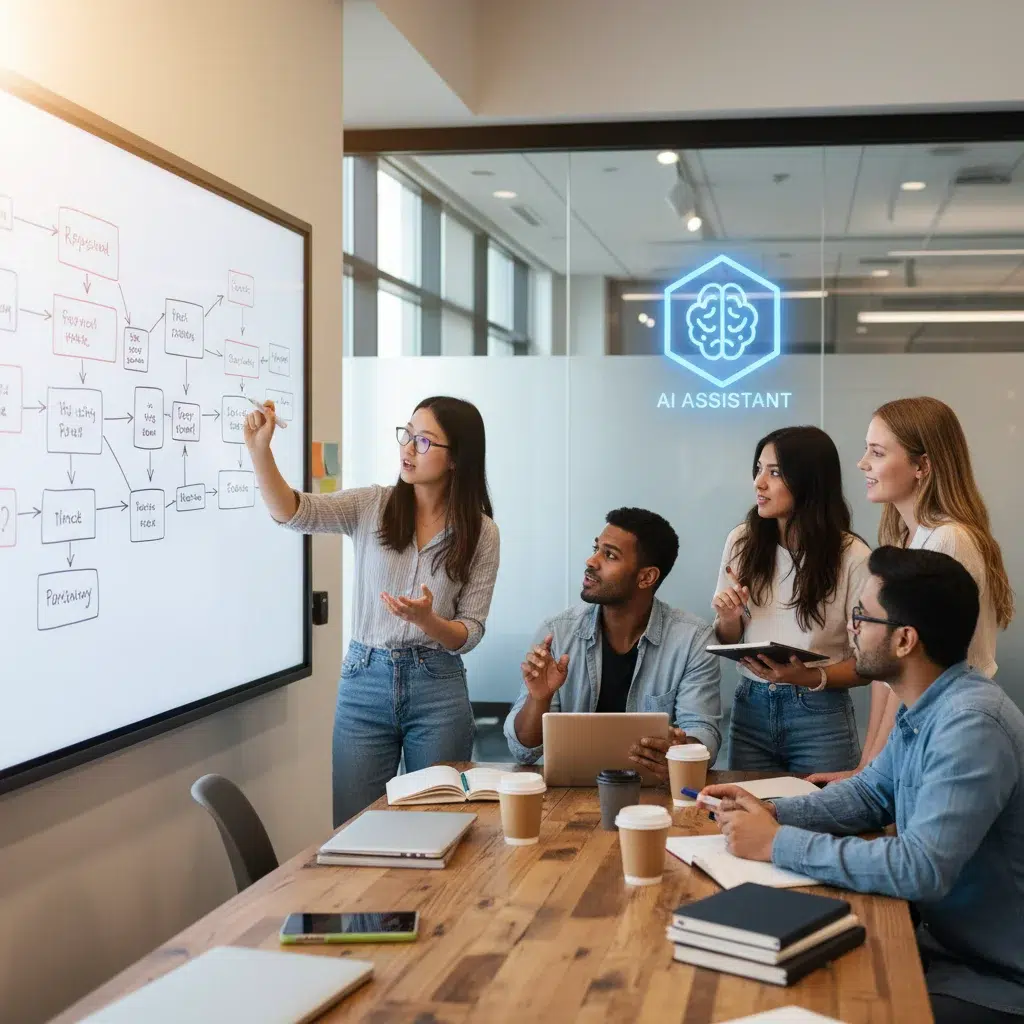
Educational programs should incorporate real-world, interdisciplinary projects that require students to apply their knowledge to novel situations, often without clear-cut answers. This could involve simulating global challenges like climate change or pandemics, where students use AI tools to analyze data, model scenarios, and propose solutions, learning to iterate and adapt their approaches based on new information. The emphasis here is on process over product, fostering a growth mindset and the capacity for continuous learning and adaptation, which are essential AI K-12 skills.
5. Collaboration and Communication in AI-Augmented Environments
Even with advanced AI, human collaboration remains indispensable. Future workplaces and communities will require individuals who can effectively collaborate not only with other humans but also with AI systems. This means understanding how to delegate tasks to AI, interpret AI’s contributions, and integrate AI-generated insights into team discussions and decision-making processes. Effective communication skills, both human-to-human and human-to-AI (e.g., crafting clear prompts), will be vital.
Collaboration in an AI-augmented environment also involves understanding the strengths and weaknesses of both human and artificial intelligence. Humans excel at empathy, intuition, and abstract reasoning, while AI excels at data processing, pattern recognition, and repetitive tasks. Students need to learn how to leverage these complementary strengths to achieve superior outcomes. This includes developing strong interpersonal skills, active listening, conflict resolution, and the ability to articulate complex ideas clearly, even when those ideas are informed by AI.
Curriculum design should prioritize group projects where students use AI tools as team members, requiring them to manage AI outputs, communicate their findings, and collaboratively refine their work. For instance, a group might use AI to research and summarize information for a presentation, then work together to synthesize, critically evaluate, and present the findings. This ensures students develop the crucial AI K-12 skills of working effectively in hybrid teams, preparing them for the collaborative demands of future careers and societal roles.
Rethinking Pedagogy for an AI-Driven Future
The integration of these essential AI K-12 skills into the curriculum by 2026 demands a significant rethinking of pedagogical approaches. Traditional teaching methods, often characterized by direct instruction and passive learning, will be insufficient. Instead, educators must embrace more experiential, inquiry-based, and project-based learning models that allow students to actively engage with AI tools and concepts.
Teachers will transition from being sole founts of knowledge to facilitators, mentors, and guides. Their role will involve designing learning experiences that challenge students to think critically, solve complex problems, and innovate with AI. Professional development for educators will be paramount, focusing not just on how to use AI tools but on how to teach effectively in an AI-rich environment. This includes understanding AI ethics, data literacy, and how to foster human-AI collaboration in the classroom.
Furthermore, assessment methods will need to evolve. Traditional tests that measure rote recall will be less relevant. Instead, assessments should focus on evaluating students’ ability to apply critical thinking, solve novel problems, create with AI, and communicate effectively. This might involve portfolios of AI-augmented projects, presentations demonstrating ethical reasoning, or collaborative challenges that assess teamwork and adaptive learning. The goal is to measure authentic learning and the development of future-ready skills, rather than just content mastery.
The physical and digital learning environments will also adapt. Classrooms may become more flexible spaces that support collaborative work, access to AI tools, and interdisciplinary exploration. Digital platforms will integrate AI to provide personalized feedback, adaptive learning paths, and intelligent tutoring systems, complementing the human teacher’s role. This holistic transformation of pedagogy is essential to successfully embed these critical AI K-12 skills into the fabric of education.
Challenges and Opportunities in Curriculum Redesign
Redesigning the K-12 curriculum to incorporate these essential AI K-12 skills is not without its challenges. One major hurdle is the rapid pace of AI development. Educational systems are inherently slow to change, and keeping curriculum updated with the latest technological advancements will require unprecedented agility. Continuous curriculum review and iteration will be necessary to ensure relevance.
Another challenge is equitable access. Not all schools or students have the same access to technology, resources, or trained educators. Ensuring that all students, regardless of their socioeconomic background or geographic location, have the opportunity to develop these crucial AI skills is a fundamental equity issue. Bridging this digital divide will require significant investment and strategic planning at local, national, and even international levels.
Teacher training is also a critical consideration. Many current educators may lack familiarity with AI concepts and tools. Comprehensive, ongoing professional development programs are essential to equip teachers with the confidence and competence to teach these new skills effectively. This includes not just technical training but also pedagogical strategies for fostering critical thinking, creativity, and ethical discussions around AI.
Despite these challenges, the opportunities presented by integrating AI into the K-12 curriculum are immense. It offers the chance to make education more engaging, relevant, and personalized. It can empower students to become active creators and ethical users of technology, rather than passive consumers. By focusing on these five essential skills – critical thinking and ethical AI literacy, algorithmic thinking and data interpretation, creativity and innovation through human-AI collaboration, complex problem-solving and adaptive learning, and collaboration and communication in AI-augmented environments – we can prepare a generation that is not just ready for the future, but capable of shaping it responsibly and innovatively. The time to act is now, to ensure that the AI K-12 skills we cultivate today lead to a brighter tomorrow.
Conclusion: Preparing for an AI-Powered Tomorrow
The journey towards an AI-integrated K-12 curriculum by 2026 is an imperative, not an option. The world our students will inherit will be profoundly shaped by artificial intelligence, and their success will depend on their ability to navigate, understand, and ethically leverage these powerful technologies. By focusing on the five essential AI K-12 skills outlined – critical thinking and ethical AI literacy, algorithmic thinking and data interpretation, creativity and innovation through human-AI collaboration, complex problem-solving and adaptive learning, and effective collaboration and communication in AI-augmented environments – we can ensure our educational systems are truly future-proof.
This transformation requires a concerted effort from policymakers, educators, parents, and technology developers. It means moving beyond superficial integration of AI tools to a deep, systemic overhaul of what and how we teach. The goal is to cultivate not just technologically proficient individuals, but thoughtful, adaptable, and ethically conscious citizens who can harness AI for the betterment of society. The future of education is intertwined with the future of AI, and by prioritizing these essential skills, we empower the next generation to lead in an increasingly intelligent world. The time for proactive change is now, laying the groundwork for a curriculum that truly prepares students for the challenges and opportunities of 2026 and beyond.