Child Tax Credit 2026: What Families Need to Know About the $3,600 Impact

Anúncios
The landscape of family finances in the United States is frequently shaped by critical tax policies, and few are as impactful as the Child Tax Credit (CTC). As we look ahead to 2026, many families are eagerly anticipating what the future holds for this vital financial support. The prospect of a $3,600 per child benefit has sparked considerable discussion and planning among households nationwide. Understanding the nuances of the Child Tax Credit 2026 is not just about knowing a number; it’s about comprehending its potential to alleviate financial burdens, stimulate local economies, and provide a stronger foundation for children’s well-being.
The Child Tax Credit has a dynamic history, evolving significantly over the years to adapt to changing economic conditions and societal needs. Its most recent, widely discussed enhancement occurred during the COVID-19 pandemic, where it saw a temporary expansion that provided substantial relief to millions of families. This expansion, which allowed for monthly payments and increased the credit amount, offered a glimpse into the profound positive effects a more robust CTC can have. As we approach 2026, the question isn’t just if the credit will be significant, but how its structure, eligibility requirements, and payment mechanisms will ultimately impact the everyday lives of American families.
Anúncios
This comprehensive guide aims to demystify the Child Tax Credit 2026. We will delve into its historical context, explain the current legislative outlook, break down who might qualify for the $3,600 per child benefit, and offer practical advice on how families can prepare to maximize this crucial financial support. Whether you’re a parent, guardian, or simply interested in how tax policy shapes the economic fabric of the nation, understanding the Child Tax Credit in 2026 is essential for informed financial planning and advocacy.
Anúncios
The Evolution of the Child Tax Credit: A Brief History
To fully appreciate the potential impact of the Child Tax Credit 2026, it’s helpful to trace its origins and evolution. The CTC was first introduced in 1997 as part of the Taxpayer Relief Act. Initially, it provided a modest credit of $400 per child, designed to help working families offset the costs of raising children. Over the years, the credit amount has been adjusted, and its provisions have been modified to broaden its reach and effectiveness.
A significant turning point came with the Tax Cuts and Jobs Act (TCJA) of 2017. This legislation substantially increased the maximum credit to $2,000 per qualifying child and made up to $1,400 of it refundable. Refundability is a crucial aspect, meaning that even if a family owes no federal income tax, they could still receive a portion of the credit as a refund. This expansion significantly benefited middle- and upper-income families, though lower-income families still faced limitations due to certain income thresholds.
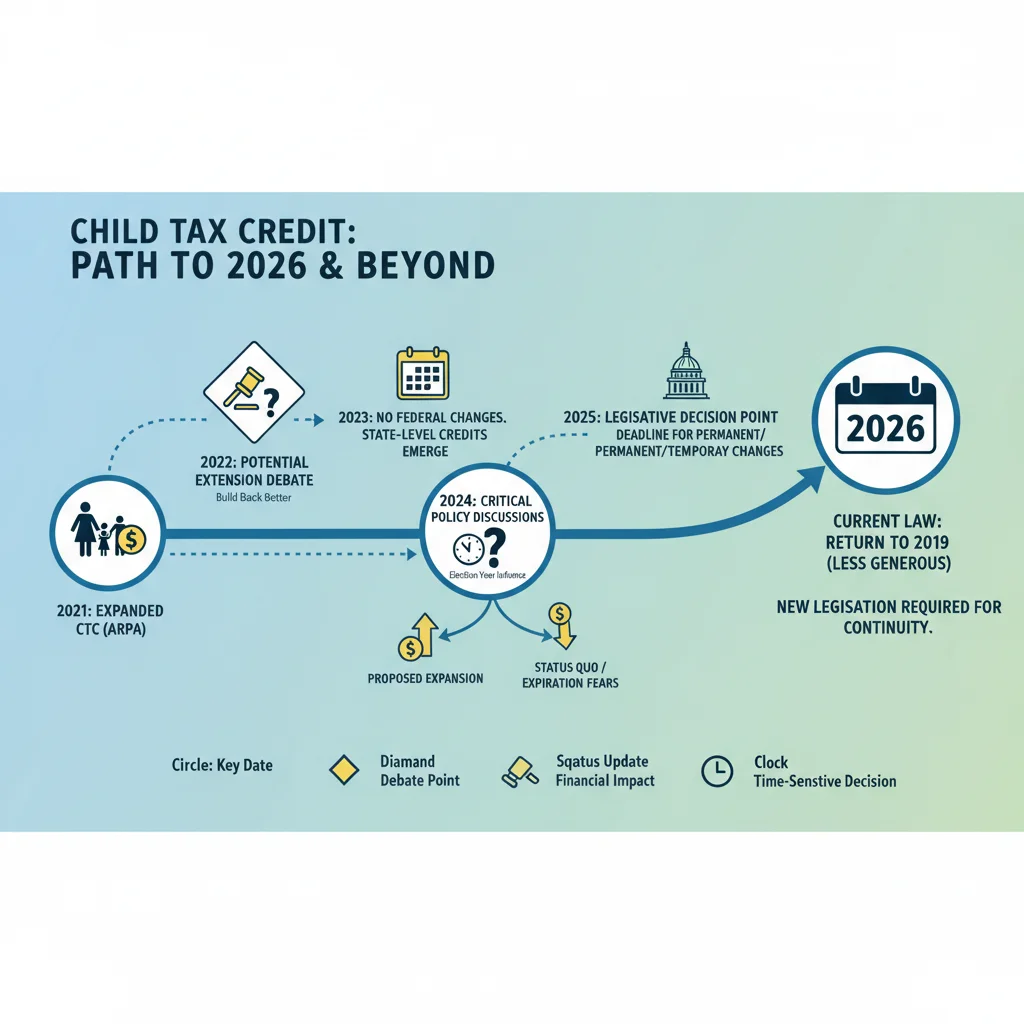
The most dramatic, albeit temporary, expansion of the CTC occurred with the American Rescue Plan Act (ARPA) of 2021. This act increased the credit to $3,600 per child under age six and $3,000 per child aged six to 17. Crucially, it made the credit fully refundable and allowed for advance monthly payments, which provided an unprecedented level of direct financial assistance to families. This temporary expansion is often cited as a model for future CTC reforms due to its measurable impact on reducing child poverty and improving family financial stability.
However, the ARPA enhancements expired at the end of 2021, and the CTC reverted to its TCJA parameters for the 2022 tax year and beyond, absent further legislative action. This reversion highlighted the ongoing debate surrounding the permanence and structure of an expanded Child Tax Credit 2026. The lessons learned from the ARPA expansion, particularly the benefits of full refundability and advance payments, continue to inform discussions about what the CTC could and should look like in the coming years, especially as we approach the significant year of 2026.
The Legislative Landscape: What to Expect for Child Tax Credit 2026
As of now, the parameters for the Child Tax Credit 2026 are not definitively set at the $3,600 per child level across the board. The current law dictates that many of the provisions from the Tax Cuts and Jobs Act (TCJA) of 2017 are set to expire at the end of 2025. This expiration creates a critical legislative window and significant uncertainty, but also an opportunity for lawmakers to revisit and potentially reshape the CTC.
Without new legislation, the CTC would revert to even older, less generous terms. This looming deadline makes 2025 and early 2026 a pivotal period for tax policy debates. There is bipartisan interest in the Child Tax Credit, though approaches to its structure, refundability, and income thresholds often differ significantly between political parties.
Several proposals have been floated that could influence the Child Tax Credit 2026:
- Permanent ARPA-like Expansion: Advocates for this approach push for making the enhanced $3,600 (or $3,000) credit permanent, along with full refundability and potentially advance monthly payments. This would require significant legislative effort and consensus.
- Bipartisan Compromise: Other proposals seek a middle ground, perhaps increasing the credit amount beyond the current $2,000 but not necessarily to the ARPA levels, or adjusting refundability rules to broaden access for lower-income families while maintaining work requirements.
- Inflation Adjustments: Even if the base credit amount remains around $2,000, there’s discussion about regularly indexing the credit to inflation, ensuring its value doesn’t erode over time.
The political climate, the outcome of upcoming elections, and the prevailing economic conditions will all play crucial roles in determining the final shape of the Child Tax Credit 2026. Families should stay informed about legislative developments, as even small changes in policy can have substantial financial implications. Organizations focused on family welfare and tax policy often provide updates and analyses that can help track these ongoing discussions.
Who Qualifies? Understanding Eligibility for the Child Tax Credit in 2026
While the exact parameters for the Child Tax Credit 2026 are subject to ongoing legislative discussions, we can outline the general eligibility requirements based on current law and common proposals. Typically, several key factors determine whether a child qualifies for the credit and whether a family can claim it.
Qualifying Child Criteria:
- Age: The child must be under the age of 17 at the end of the tax year for which the credit is claimed. (The ARPA expansion temporarily raised this to 17, but under TCJA rules, it’s under 17).
- Relationship: The child must be your son, daughter, stepchild, foster child, brother, sister, half-brother, half-sister, stepbrother, stepsister, or a descendant of any of them (e.g., grandchild, niece, nephew).
- Residency: The child must have lived with you for more than half of the tax year. There are exceptions for temporary absences, such as for schooling or medical care.
- Support: The child must not have provided more than half of their own support for the year.
- Citizenship: The child must be a U.S. citizen, U.S. national, or U.S. resident alien.
Taxpayer Eligibility Criteria:
Beyond the child’s qualifications, the taxpayer claiming the credit must also meet certain criteria, primarily related to income. The Child Tax Credit 2026, regardless of its final amount, will likely have income phase-out thresholds. Under current law (post-ARPA expiration), the credit begins to phase out for:
- Married couples filing jointly with a modified adjusted gross income (MAGI) over $400,000.
- All other filers (single, head of household, married filing separately) with a MAGI over $200,000.
It’s important to note that if the ARPA-like enhancements were to be reinstated for Child Tax Credit 2026, lower income thresholds for the enhanced portion ($3,600/$3,000) might apply, with a secondary, higher threshold for the base $2,000 credit. This tiered phase-out can make eligibility calculations more complex.
Refundability: The degree of refundability is another critical aspect. Under current law, up to $1,600 of the credit is refundable for 2023 (indexed for inflation), meaning families can receive it even if they owe no tax, provided they have earned income above a certain threshold. Full refundability, as seen in 2021, removes this earned income requirement, making the credit accessible to the lowest-income families. The debate around Child Tax Credit 2026 will heavily feature discussions on how refundable the credit will be.
Families should always consult the latest IRS guidelines or a tax professional as the tax year approaches, as eligibility rules can be intricate and subject to last-minute legislative changes.
The $3,600 per Child Impact: What it Means for Your Family
The prospect of receiving $3,600 per child through the Child Tax Credit 2026 represents a significant financial boost for eligible families. To put this into perspective, a family with two qualifying children could potentially receive $7,200, and a family with three could receive $10,800. This level of support can have transformative effects on household budgets and overall well-being.
Immediate Financial Relief: For many families, especially those struggling with the rising costs of living, a substantial CTC can provide immediate relief. This could mean covering essential expenses such as:
- Groceries and Food Security: Ensuring children have nutritious meals.
- Housing Costs: Helping with rent or mortgage payments, reducing the risk of housing instability.
- Utilities: Keeping the lights on and homes warm or cool.
- Childcare: Significantly offsetting the often-prohibitive costs of daycare or after-school programs, enabling parents to work.
Investment in Children’s Futures: Beyond immediate needs, the Child Tax Credit 2026 can enable families to invest in their children’s development and future opportunities:
- Education: Funding school supplies, tutoring, extracurricular activities, or even saving for college.
- Healthcare: Covering out-of-pocket medical expenses, dental care, or vision care that might otherwise be deferred.
- Enrichment Activities: Allowing children to participate in sports, arts, or other programs that foster growth and learning.
Economic Stimulus: The broader economic impact of a robust Child Tax Credit 2026 cannot be overstated. When families have more disposable income, they tend to spend it on goods and services within their local communities. This increased consumer spending can stimulate local businesses, create jobs, and contribute to overall economic growth. The 2021 expansion demonstrated how direct payments to families can quickly circulate through the economy, providing a boost during challenging times.
Poverty Reduction: Perhaps one of the most profound impacts of an expanded CTC, particularly one that is fully refundable, is its potential to significantly reduce child poverty. The 2021 expansion led to a dramatic decrease in child poverty rates, lifting millions of children out of poverty or near-poverty. A $3,600 per child credit in 2026 could replicate or even surpass these positive outcomes, providing a critical safety net for the most vulnerable families and offering children a better start in life.
For individual families, the $3,600 per child benefit isn’t just a number; it’s a tool for stability, growth, and opportunity, empowering them to make choices that best support their children’s well-being and their financial future.
Preparing for the Child Tax Credit 2026: What Families Can Do Now
Even with the legislative uncertainty surrounding the Child Tax Credit 2026, there are proactive steps families can take now to ensure they are prepared to maximize any potential benefits. Financial preparedness is key, regardless of the final credit amount.
1. Stay Informed About Legislative Changes:
- Follow Reputable News Sources: Keep an eye on major financial news outlets and government websites (like the IRS and Treasury Department) for updates on tax legislation.
- Consult Advocacy Groups: Organizations focused on child welfare and family economic security often provide timely analyses of proposed changes and their potential impact.
- Subscribe to Updates: Many financial blogs and government agencies offer newsletters that can keep you informed without constant searching.
2. Maintain Accurate Records:
- Child Information: Ensure you have accurate Social Security numbers (SSNs) or Individual Taxpayer Identification Numbers (ITINs) for all qualifying children. The IRS uses these to verify eligibility.
- Residency and Support: Keep records that can prove a child lived with you for more than half the year and that you provided more than half of their support (e.g., school records, medical bills, utility statements).
- Income Records: Organize your income statements (W-2s, 1099s, etc.) throughout the year. Accurate income reporting is crucial for determining eligibility and credit amounts, especially if there are income phase-outs for the Child Tax Credit 2026.
3. Review Your Tax Situation Annually:
- Understand Your AGI: Your Adjusted Gross Income (AGI) is a key factor for many tax credits, including the CTC. Understand how different income sources and deductions affect your AGI.
- Filing Status: Ensure you are using the most advantageous filing status (e.g., Head of Household, Married Filing Jointly) as this can impact income thresholds for credits.
- Tax Withholding: Adjust your W-4 with your employer if your family situation changes or if you anticipate a significant change in tax credits. This can help prevent underpayment or overpayment of taxes throughout the year.
4. Plan Your Finances:
- Budgeting: Incorporate potential tax credits like the Child Tax Credit 2026 into your long-term financial planning. If you anticipate receiving a substantial refund, consider how you might allocate those funds – for savings, debt reduction, or specific family needs.
- Emergency Fund: Building an emergency fund is always a wise financial strategy. Any tax credit can contribute to strengthening this safety net.
- Consult a Tax Professional: For complex financial situations or if you have specific questions about eligibility for the Child Tax Credit 2026, a qualified tax advisor can provide personalized guidance and help ensure you claim all eligible credits.
By taking these proactive steps, families can position themselves to effectively navigate the evolving tax landscape and make the most of the Child Tax Credit 2026, whatever its final form may be.

Common Misconceptions About the Child Tax Credit
The Child Tax Credit, particularly with its past fluctuations and future uncertainties, is often subject to misunderstandings. Dispelling these myths is crucial for families to accurately plan and claim what they are entitled to regarding the Child Tax Credit 2026.
Myth 1: The Child Tax Credit is Only for Low-Income Families.
Reality: While the CTC significantly benefits low-income families, it is available to a wide range of income levels. Under current law, the credit begins to phase out for higher-income households (e.g., $400,000 for married filing jointly). Even if the ARPA expansion returns, there were still high-income thresholds for the base credit. Many middle and even some upper-middle-income families can qualify for at least a partial credit.
Myth 2: All Children Qualify for the Same Amount.
Reality: The amount can vary. During the ARPA expansion, children under six years old qualified for $3,600, while those aged six to 17 qualified for $3,000. Future legislation for the Child Tax Credit 2026 could reintroduce age-based variations or other factors that alter the per-child amount. Always check the specific rules for the tax year.
Myth 3: You Automatically Receive the Credit; No Action is Needed.
Reality: Unless there’s a system for advance payments (like in 2021), families must actively claim the Child Tax Credit when filing their federal income tax return. If advance payments are reinstated for Child Tax Credit 2026, families might receive a portion beforehand, but they would still need to reconcile it on their tax return.
Myth 4: Children Must Have a Social Security Number (SSN) to Qualify.
Reality: While the qualifying child generally needs an SSN, the taxpayer claiming the credit (if they don’t have an SSN) can use an Individual Taxpayer Identification Number (ITIN). However, the child themselves must have an SSN that is valid for employment. This distinction is important for mixed-status families. For the additional Child Tax Credit (the refundable portion), both the child and the taxpayer must have a valid SSN or ITIN. The specific rules for Child Tax Credit 2026 will dictate the exact requirements.
Myth 5: The Child Tax Credit is the Same as the Child and Dependent Care Credit.
Reality: These are two distinct tax credits. The Child Tax Credit helps families with the general costs of raising children. The Child and Dependent Care Credit specifically helps with expenses paid for the care of a qualifying child or dependent so that the taxpayer can work or look for work. Families may be eligible for both, but they serve different purposes and have different eligibility rules.
Understanding these distinctions is vital for accurate tax preparation and for maximizing the benefits available to your family under the Child Tax Credit 2026 and other relevant tax provisions.
Conclusion: Navigating the Future of the Child Tax Credit in 2026
The Child Tax Credit 2026 stands at a pivotal juncture, with the potential for significant impact on millions of American families. While the exact contours of the credit – particularly whether it will reach the $3,600 per child level seen during the temporary ARPA expansion – remain subject to legislative debate and future political decisions, its importance as a tool for economic stability and child well-being is undeniable.
From its origins as a modest tax break to its potential as a robust anti-poverty measure, the CTC has evolved, reflecting changing societal needs and economic realities. The discussions leading up to 2026 will undoubtedly center on key aspects such as the credit amount, its refundability, income thresholds, and whether advance payments will become a permanent feature. Each of these elements carries profound implications for household budgets, children’s development, and the broader economy.
For families, the message is clear: staying informed, maintaining meticulous records, and proactive financial planning are essential. By understanding the historical context, keeping abreast of legislative developments, and preparing for various scenarios, you can position your household to effectively leverage the benefits of the Child Tax Credit 2026. Whether it’s covering daily necessities, investing in educational opportunities, or building a more secure financial future, the CTC remains a critical component of family financial health.
As we move closer to 2026, the ongoing dialogue among policymakers, advocates, and the public will shape this vital program. The goal remains to craft a Child Tax Credit that effectively supports families, reduces child poverty, and contributes to the long-term prosperity of the nation’s children. Your engagement and awareness are key to ensuring that the future of the Child Tax Credit truly serves the needs of American families.