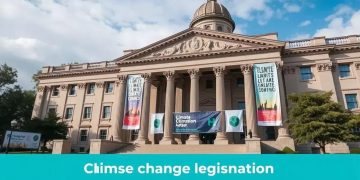
state-level climate policy conflicts with federal targets?

Anúncios
state-level climate policy conflicts with federal targets occur when state laws set different timelines, standards, or enforcement mechanisms than national rules, creating legal uncertainty, duplicated compliance, project delays, higher costs for utilities and businesses, and shifted economic impacts that require coordination and targeted transition funds.
state-level climate policy conflicts with federal targets are reshaping decisions from city halls to power plants. How will differing goals affect bills, jobs and the pace of emissions cuts? Let’s unpack the trade-offs you might see in your community.
Anúncios
how state and federal climate targets diverge
state-level climate policy conflicts with federal targets when a state sets goals or rules that do not match national timelines or methods. That gap can change how fast emissions fall and who pays for the transition.
Anúncios
This section breaks down where goals diverge, why it matters, and practical effects for utilities, businesses, and residents.
How timelines and scope differ
States may pick faster or slower target years than federal plans. They also choose which sectors to cover, like power, transport, or industry.
When a state aims for near-term cuts but the federal plan is slower, or vice versa, projects and permits face confusion.
Common policy tools and their clash
Different tools lead to different outcomes. Some states favor market approaches; others use strict standards.
- Cap-and-trade vs. performance standards: markets price emissions, while standards set limits for sources.
- Incentives and rebates: states may push subsidies that speed renewables beyond federal pace.
- Regulatory choices: states control permitting and siting, which affects project timing.
These mixed tools can cause overlapping rules and extra compliance costs for companies working across state lines.
Legal and enforcement gaps
Authority matters. Federal rules can preempt state law, but courts often weigh in. States can also add enforcement steps that go further than federal requirements.
That creates uncertainty for businesses that must follow both sets of rules and watch for legal shifts.
Practical impacts on communities and markets
When targets diverge, energy prices, job patterns, and investment flows change. Utilities may delay or accelerate plant retirements. Developers may move where rules are clearer.
- Consumers may see different bills depending on local policy design.
- Workers may need new skills if states move faster toward clean energy.
- Businesses face higher planning costs when rules are inconsistent across states.
Smaller communities can be hit hardest if funding or transition support is uneven.
In many cases, coordination and clear timelines reduce costs and speed progress. Transparent rules help investors and local planners align projects with both state and federal goals.
Key takeaway: mismatches between state-level climate policy conflicts with federal targets create practical trade-offs in timing, cost, and legal risk. Clear coordination and predictable rules help smooth the path to lower emissions.
legal clashes: courts, preemption and enforcement
state-level climate policy conflicts with federal targets often play out in courtrooms and regulatory offices. These legal fights decide which rules apply and how strictly they will be enforced.
Understanding preemption, litigation trends, and enforcement tools helps communities and companies plan better and avoid costly surprises.
what preemption means
Preemption is when federal law overrides state rules. Courts ask whether Congress meant to leave room for states or to set a national floor.
When laws are unclear, judges look at the statute, intent, and practical effects of both rules.
recent court trends and cases
Several cases have tested whether federal climate programs block state actions. Courts weigh consistency, state interests, and federal aims.
- Some rulings limit state rules that conflict directly with federal standards.
- Others allow states to go further when federal law sets a minimum but not a ceiling.
- Court decisions can hinge on technical details like regulatory scope and agency authority.
These outcomes shape how aggressive states feel they can be without triggering reversal.
enforcement tools and practical effects
Enforcement varies: federal agencies can impose fines or withhold approvals, while states can use permitting and state penalties.
When both levels enforce different standards, companies may face duplicate permits, higher compliance costs, and slower projects.
Clear enforcement plans and early coordination reduce legal risk and help keep projects on schedule.
how stakeholders respond
States, businesses, and NGOs adapt by drafting flexible rules, filing amicus briefs, or seeking cooperative agreements.
- Businesses push for predictability through compliance plans and legal reviews.
- States may phase rules to avoid direct conflict with federal timelines.
- Communities and NGOs use litigation to protect local health or push for stronger climate action.
These strategies shape who wins in court and how fast policies take effect.
Key point: when state-level climate policy conflicts with federal targets, legal clarity and early coordination matter most. Clear statutes, careful rule design, and strategic enforcement reduce uncertainty and help align goals across levels of government.
economic effects on communities, industry and jobs

state-level climate policy conflicts with federal targets can reshape local economies fast. Workers, small businesses, and local budgets feel the change differently.
Below we map the main economic effects and practical steps communities take to adapt.
direct job and industry impacts
When state rules move faster than federal plans, some firms speed up investments while others pause. That shift affects hiring and plant closures.
- Losses in fossil-fuel jobs when plants retire sooner than planned.
- Growth in construction and installation jobs for renewables.
- Supply-chain shifts as manufacturers follow demand for new technology.
These changes can be sudden for towns tied to a single employer. Workers may need new skills and time to find steady work.
effects on local revenue and household costs
Policy gaps change tax income and utility bills. Faster transitions can cut fossil-fuel tax revenue but may raise short-term costs.
Higher permit or compliance costs can pass to consumers if utilities recover expenses. At the same time, new investments can expand the tax base long term.
Communities with limited fiscal buffers face tighter budgets and may reduce services unless support is provided.
how markets and investments respond
Investors look for predictable rules. Mismatched targets increase perceived risk, which can slow private investment.
- Developers favor states with clear, stable policy paths.
- Projects may shift regions, affecting local employment.
- Financing costs rise when legal and regulatory risk is high.
Clear timelines and coordination help attract funding and speed project delivery.
Smaller businesses also feel the pinch. They face higher energy or compliance bills and may lack capital to upgrade equipment or compete for new contracts.
strategies to reduce harm and share gains
Policies can soften shocks by pairing rules with targeted support. Good approaches include retraining programs, transition funds, and incentives for local hiring.
Public-private partnerships and early consultation with communities help direct benefits to affected workers and towns.
Key idea: when state-level climate policy conflicts with federal targets, the economic impact is mixed but manageable with planning, funding for transitions, and clear rules that guide investment and protect workers.
implementation hurdles: permitting, timelines and compliance
state-level climate policy conflicts with federal targets often show up as practical hurdles when projects try to move from plan to reality. Permits, shifting dates, and unclear rules can stall clean energy or efficiency work.
This section looks at common permitting snags, timeline mismatches, and compliance risks, and points to steps that cut delays and costs.
permitting delays and local approval
Many projects wait months or years for permits. Local zoning, environmental reviews, and public hearings add time and uncertainty.
- Lengthy environmental reviews that repeat federal studies.
- Local opposition or zoning limits that force redesigns.
- Differing permit requirements across jurisdictions for the same project.
These delays raise costs and scare off investors who need predictable schedules.
timeline mismatches and planning risk
States and the federal government may set different target years or phased rules. That makes it hard to plan construction, financing, and fuel contracts.
Contractors struggle to commit crews, and utilities must choose whether to retire plants early or wait. Both choices carry financial risk.
Developers often build contingency plans, but those raise prices and slow deployment.
overlapping compliance, reporting and enforcement
Companies can face two sets of reporting rules, audits, or penalties when state and federal standards differ. That creates duplicate work and legal exposure.
- Different emissions metrics or baselines across programs.
- Separate reporting schedules and formats that add administrative cost.
- Risk of conflicting enforcement actions from state and federal agencies.
Smaller firms are hit hardest because they lack large compliance teams.
Practical fixes include joint permitting processes, shared data portals, and model rules that states can adopt. Early consultations between agencies and applicants also cut surprises.
Phasing requirements with clear milestones helps businesses plan investments and training. Grants or low-interest loans can bridge costs during transition phases and keep projects moving.
Bottom line: when state-level climate policy conflicts with federal targets, the main implementation hurdles are permits, shifting timelines, and doubled compliance. Coordination, shared procedures, and phased rules reduce delay, lower cost, and make outcomes more predictable for communities and businesses.
ways to reconcile goals: negotiation, incentives and compromise
state-level climate policy conflicts with federal targets can be eased when leaders choose negotiation, clear incentives, and practical compromise. Small steps and shared plans make big rules easier to apply.
Below are proven ways governments and stakeholders align goals while protecting communities and investors.
negotiation and joint rulemaking
States and federal agencies can meet early to map differences. Joint rulemaking reduces surprises and creates shared timelines.
Agreements often set common data standards, shared milestones, and dispute resolution steps. That helps regulators act in sync rather than fight later.
incentives and targeted funding
Money and tax breaks steer action. Grants, matching funds, and tax credits make it cheaper to deploy clean projects in places that need them most.
- Direct grants for worker retraining and community transition funds.
- Tax credits or loan guarantees to lower financing costs for clean energy.
- Performance bonuses for utilities that meet both state and federal goals.
These incentives lower the short-term cost of change and make the long-term case for clean investments.
model rules and regional approaches
States can adopt model rules that mirror federal metrics. Regional compacts let neighbors align standards and share markets.
Common approaches reduce compliance cost for companies that work in multiple states and open larger markets for clean tech.
Pilot programs test new ideas at small scale. If pilots succeed, policymakers scale them up with clear guardrails to protect workers and customers.
flexible compliance and phased timelines
Phased rules let firms adapt. Flexible targets, credit banking, and offset systems give businesses breathing room while ensuring progress.
Sunsetting older rules and setting clear review points creates predictability. That helps investors set realistic plans and keeps projects moving.
stakeholder engagement and legal tools
Inclusive talks with local leaders, unions, and businesses build trust and surface practical barriers early. Memoranda of understanding and waiver processes can bridge legal gaps.
- Formal memoranda to define roles and timelines.
- Waivers or conditional approvals where federal law allows state innovation.
- Independent review panels to resolve technical disputes quickly.
These tools reduce litigation risk and speed implementation when properly designed.
In short, aligning goals works best when negotiation, well‑targeted incentives, regional cooperation, and flexible rules come together. That combination eases the pain of transition and boosts the chance that both state and federal targets are met without needless conflict.
state-level climate policy conflicts with federal targets create real costs and delays, but they are manageable. With early coordination, targeted funding, flexible timelines, and clear legal design, states and the federal government can align actions and protect workers, consumers, and investors.
FAQ – state and federal climate policy conflicts
What happens when state and federal climate targets conflict?
Conflicts create legal uncertainty, slow project approvals, and raise compliance costs for utilities and businesses until rules are clarified or courts decide.
Can states set stricter rules than the federal government?
Often yes: states can go further when federal law sets a floor, but courts may limit state rules if they directly conflict with federal statutes.
How do these conflicts affect jobs and energy bills?
They can shift jobs from fossil fuel to clean energy sectors, cause short-term cost increases, and change local tax revenue—making planning and retraining important.
What practical steps reduce delays and costs?
Early coordination, joint rulemaking, phased timelines, targeted transition funds, and clear reporting standards help align goals and cut legal risk.