Navigating 2026 Tax Code Revisions: 7 Key Personal Finance Changes

Anúncios
Understanding the ever-evolving landscape of tax regulations is not just a chore; it’s a critical component of sound financial planning. As we approach 2026, a series of significant 2026 Tax Code Revisions are poised to reshape how individuals manage their personal finances. These changes, stemming from various legislative actions and sunset provisions of previous tax laws, demand careful attention from every taxpayer. Ignoring them could lead to missed opportunities for savings or, worse, unexpected tax liabilities. This comprehensive guide will delve into seven key changes affecting your 2026 personal finances, providing clarity and actionable insights to help you navigate the new fiscal environment successfully.
The implications of these revisions extend beyond mere compliance; they touch upon every facet of financial life, from investment strategies and retirement planning to estate considerations and everyday budgeting. Our goal is to demystify these complex changes, empowering you with the knowledge needed to adapt and thrive. We’ll break down each revision, explain its potential impact, and offer practical advice on how you can proactively adjust your financial strategies. Whether you are a high-income earner, a small business owner, or simply an individual looking to optimize your tax situation, this article will serve as an indispensable resource. Let’s embark on this journey to understand and master the 2026 Tax Code Revisions.
Anúncios
Key Change 1: Adjustments to Individual Income Tax Brackets
One of the most immediate and widespread impacts of the 2026 Tax Code Revisions will be the adjustments to individual income tax brackets. While specific percentages and thresholds are subject to final legislative approval, projections indicate shifts that could move taxpayers into different brackets, affecting their marginal tax rates. This isn’t just about higher or lower rates; it’s about understanding where your income now falls and how that influences your overall tax burden.
Anúncios
Historically, tax brackets are adjusted for inflation, but the 2026 changes could go beyond simple indexation. We might see a restructuring of the number of brackets or significant alterations to the income thresholds for existing brackets. For instance, if the lower brackets expand, more of your income could be taxed at a lower rate, potentially leading to savings. Conversely, if thresholds for higher brackets decrease, more of your income could be subject to higher marginal rates.
What You Need to Do:
- Review Your Income Projections: Estimate your income for 2026. This includes salary, bonuses, investment income, and any other sources.
- Understand New Thresholds: Once released, compare your projected income against the new bracket thresholds to see your likely marginal tax rate.
- Tax Planning Strategies: Consider strategies like tax-loss harvesting, contributing to pre-tax retirement accounts, or adjusting your withholding to align with the new brackets. For those on the cusp of a new bracket, even small adjustments to income or deductions can make a significant difference.
The goal is to avoid surprises and ensure your financial planning is aligned with the new tax landscape. Proactive analysis of your income and the revised brackets is paramount for effective tax management under the 2026 Tax Code Revisions.
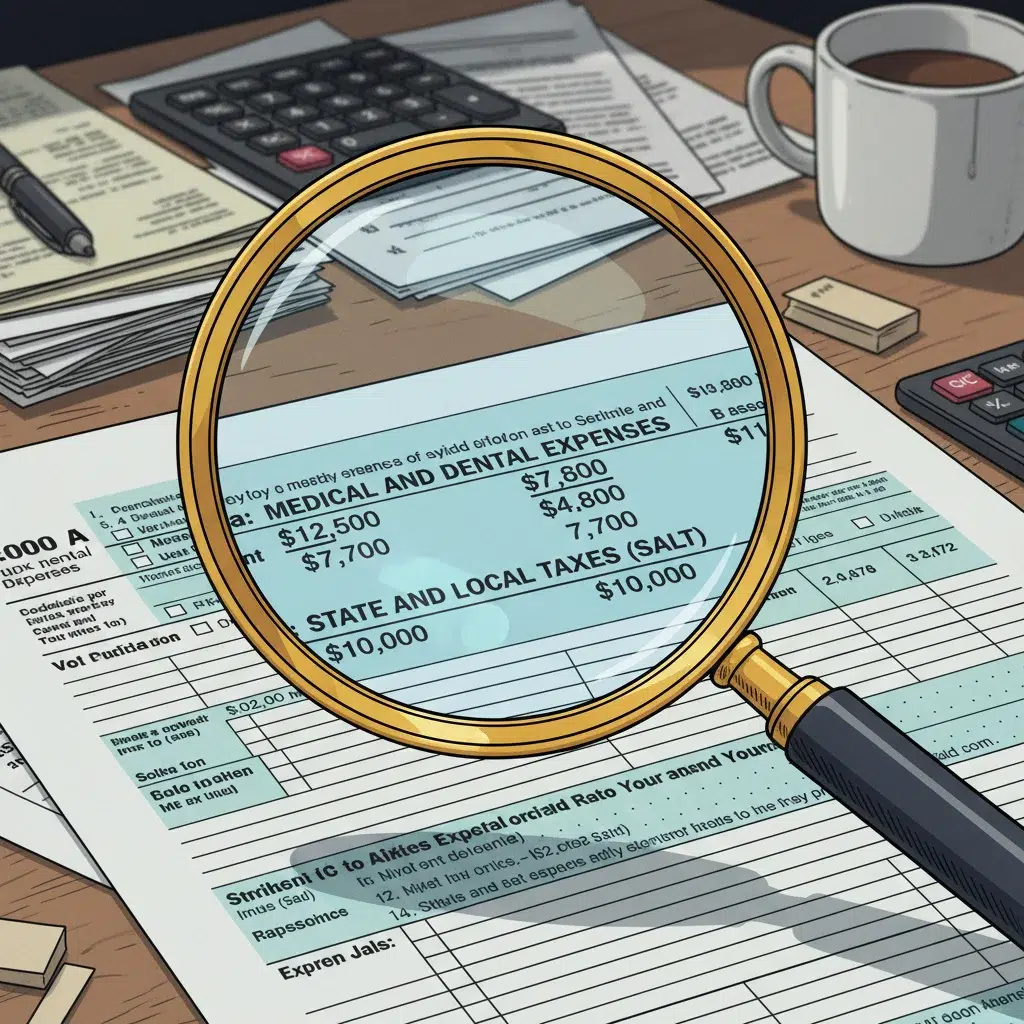
Key Change 2: Standard Deduction and Itemized Deduction Thresholds
Another area undergoing significant transformation under the 2026 Tax Code Revisions involves the standard deduction and itemized deduction thresholds. The Tax Cuts and Jobs Act (TCJA) of 2017 dramatically increased the standard deduction, leading many taxpayers to opt for it over itemizing. However, some of TCJA’s provisions are set to expire, which could lead to a recalibration of these figures.
It’s anticipated that the standard deduction amounts might revert closer to pre-TCJA levels, adjusted for inflation. This potential decrease means that more taxpayers might find it advantageous to itemize their deductions once again. Conversely, the thresholds for various itemized deductions could also be altered, impacting the value of deductions like state and local taxes (SALT) – which currently has a \$10,000 cap – mortgage interest, and charitable contributions.
What You Need to Do:
- Track Your Deductible Expenses: Start meticulously tracking all potential itemized deductions, including medical expenses, state and local taxes, mortgage interest, and charitable donations.
- Compare & Project: Once the new standard deduction amounts and itemized deduction rules for 2026 are finalized, compare them against your projected itemized expenses. Determine which approach – standard or itemized – will yield the greater tax benefit.
- Strategic Gifting/Spending: If itemizing becomes more beneficial, consider “bunching” deductions – accelerating certain deductible expenses into one tax year to exceed the standard deduction threshold. For instance, making larger charitable contributions in a specific year.
Understanding the interplay between the standard and itemized deductions is crucial for optimizing your tax liability under the 2026 Tax Code Revisions. This change alone could significantly alter the tax strategies for millions of American households.
Key Change 3: Child Tax Credit and Family-Related Tax Benefits
Families often rely on various tax credits to reduce their overall tax burden, and the Child Tax Credit (CTC) is a cornerstone of this support. The 2026 Tax Code Revisions are expected to bring changes to the CTC and other family-related tax benefits, potentially reverting to pre-expanded amounts or adjusting eligibility criteria. The American Rescue Plan Act of 2021 temporarily expanded the CTC, making it fully refundable and increasing the maximum amount per child. These enhancements, however, were temporary.
As we head into 2026, the CTC is likely to revert to its \$2,000 per child maximum, with a more restrictive refundability threshold. Furthermore, the income phase-out limits might also return to lower levels, meaning higher-income families could see their credit reduced or eliminated at lower income thresholds than they did during the temporary expansion. Other family-related credits, such as the Credit for Other Dependents or the Earned Income Tax Credit (EITC), could also see adjustments.
What You Need to Do:
- Re-evaluate Eligibility: Review the new income phase-out limits and eligibility requirements for the CTC and other family credits for 2026.
- Adjust Budgeting: If your family relied on the expanded CTC for budgeting, prepare for a potential decrease in this benefit and adjust your financial plans accordingly.
- Explore Other Benefits: Research other state or local family tax benefits or programs that might help offset any reductions in federal credits.
For families, these changes could have a noticeable impact on disposable income and overall financial planning. Staying informed about the precise nature of these family-related tax benefit adjustments within the 2026 Tax Code Revisions will be essential for managing household finances effectively.
Key Change 4: Estate and Gift Tax Exemptions
For individuals with substantial assets, the 2026 Tax Code Revisions will bring critical changes to estate and gift tax exemptions. Under current law, the federal estate and gift tax exemption is historically high, allowing individuals to transfer significant wealth without incurring federal estate or gift taxes. However, this elevated exemption amount is also a provision of the TCJA set to expire.
It is widely anticipated that the federal estate and gift tax exemption will revert to pre-TCJA levels, approximately half of its current amount, adjusted for inflation. This significant reduction means that more estates could become subject to federal estate taxes, and more gifts made during an individual’s lifetime could utilize a larger portion of their lifetime exemption or even trigger gift tax liabilities. This change primarily affects high-net-worth individuals and families, necessitating a re-evaluation of their estate planning strategies.
What You Need to Do:
- Review Estate Plan: If you have an existing estate plan, consult with an estate planning attorney to understand how these potential changes will impact your current wills, trusts, and gifting strategies.
- Consider “Gifting While You Can”: For those with significant wealth, consider utilizing the higher current gift tax exemption before it potentially reverts. This could involve making substantial gifts to heirs or establishing irrevocable trusts.
- Explore Other Strategies: Investigate other wealth transfer strategies, such as charitable giving, life insurance trusts, or GRATs (Grantor Retained Annuity Trusts), which might become more appealing under the new exemption levels.
Proactive estate planning is crucial to mitigate potential tax liabilities and ensure your wishes for wealth distribution are honored under the impending 2026 Tax Code Revisions. The time to act on current exemptions is now, before the window of opportunity potentially closes.
Key Change 5: Business Tax Deductions and Pass-Through Income
While primarily focused on individual finances, the 2026 Tax Code Revisions will also have a ripple effect on small business owners and individuals with pass-through income. The Qualified Business Income (QBI) deduction, also known as the Section 199A deduction, allows eligible self-employed individuals and owners of pass-through entities (S corporations, partnerships, LLCs, and sole proprietorships) to deduct up to 20% of their qualified business income. This deduction was another key provision of the TCJA set to expire.
The expiration of the QBI deduction would mean that income from these sources would be taxed at ordinary individual income tax rates, without the benefit of the 20% reduction. This change could significantly increase the tax burden for millions of small business owners and independent contractors, impacting their profitability and reinvestment capabilities. Furthermore, other business-related deductions or depreciation rules could also see modifications as part of broader tax reform efforts.
What You Need to Do:
- Project Business Income: Accurately forecast your business income for 2026 and beyond.
- Re-evaluate Business Structure: Consult with a tax professional to determine if your current business structure remains the most tax-efficient under the new rules. Some businesses might consider restructuring to C-corporations, though this has its own set of tax implications.
- Optimize Other Deductions: Maximize other available business deductions and credits to offset the potential loss of the QBI deduction. This includes expenses for equipment, office space, employee benefits, and professional development.
For entrepreneurs and self-employed individuals, understanding the adjustments to business tax deductions and pass-through income is paramount. Proactive planning and consultation with tax experts will be essential to maintain financial health amidst the 2026 Tax Code Revisions.
Key Change 6: Capital Gains and Investment Income Taxation
Investors will need to pay close attention to potential alterations in the taxation of capital gains and investment income as part of the 2026 Tax Code Revisions. While there isn’t a direct sunset provision for capital gains rates from the TCJA, there has been ongoing discussion and legislative proposals to adjust these rates, particularly for high-income earners. Any changes here could profoundly impact investment strategies, portfolio management, and long-term financial planning.
Potential changes could include an increase in the long-term capital gains tax rates, especially for those in higher income brackets. There might also be adjustments to the net investment income tax (NIIT), which currently applies a 3.8% tax on certain investment income for taxpayers whose modified adjusted gross income exceeds specific thresholds. Furthermore, discussions around “step-up in basis” at death – a provision that allows heirs to inherit assets at their fair market value at the time of death, thus avoiding capital gains tax on prior appreciation – could also materialize, though this is a more contentious issue.
What You Need to Do:
- Review Portfolio & Strategy: Assess your current investment portfolio and long-term investment strategy. Consider the implications of potential higher capital gains rates on your buy-and-hold vs. active trading decisions.
- Tax-Advantaged Accounts: Maximize contributions to tax-advantaged retirement accounts (401(k)s, IRAs) and health savings accounts (HSAs), where capital gains can grow tax-deferred or even tax-free.
- Tax-Loss Harvesting: Continue or begin to strategically utilize tax-loss harvesting to offset capital gains and potentially a limited amount of ordinary income.
- Diversify Investment Vehicles: Explore different investment vehicles, including municipal bonds for tax-exempt interest, or annuities for tax-deferred growth, depending on your financial goals and risk tolerance.
Navigating these potential changes to capital gains and investment income taxation requires a sophisticated approach to portfolio management. Staying agile and informed about the specific details of the 2026 Tax Code Revisions will be crucial for protecting and growing your wealth.

Key Change 7: Retirement Contribution Limits and Rules
Retirement planning is a cornerstone of long-term financial security, and the 2026 Tax Code Revisions could introduce significant adjustments to retirement contribution limits and rules. While annual contribution limits for 401(k)s, IRAs, and other retirement accounts are typically indexed for inflation, there’s always the possibility of legislative action that could alter these amounts or the rules governing withdrawals and distributions.
For instance, there could be changes to the “catch-up” contribution rules for older workers, modifications to Required Minimum Distributions (RMDs), or even alterations to the tax treatment of Roth conversions. While the SECURE Act and SECURE 2.0 Act have already brought substantial changes to retirement planning, future legislative efforts could continue to refine these rules, impacting how individuals save for and draw from their retirement nest eggs.
What You Need to Do:
- Stay Updated on Limits: Keep abreast of the latest contribution limits for 401(k)s, IRAs, and other retirement vehicles for 2026.
- Maximize Contributions: Continue to contribute the maximum allowable amounts to your retirement accounts, especially if pre-tax contributions are still a strong tax-saving strategy for you.
- Review Withdrawal Strategies: If you are nearing or in retirement, review your withdrawal strategies in light of any potential changes to RMD rules or the taxation of distributions. Consider strategies like Roth conversions if advantageous under new tax brackets.
- Consult a Financial Advisor: A financial advisor specializing in retirement planning can help you navigate these complex rules and optimize your retirement savings strategy in line with the 2026 Tax Code Revisions.
Proactive engagement with your retirement plan and staying informed about legislative developments will ensure your golden years remain financially secure, regardless of the changes introduced by the 2026 Tax Code Revisions.
Preparing for the 2026 Tax Code Revisions: A Holistic Approach
The impending 2026 Tax Code Revisions are not isolated adjustments; they represent a significant shift that demands a holistic approach to personal financial planning. Each of the seven key changes discussed – from income tax brackets and standard deductions to estate taxes, business income, capital gains, and retirement rules – interlinks and influences the others. A change in one area can have cascading effects across your entire financial picture.
For instance, if individual income tax brackets shift and the standard deduction decreases, your decision to itemize deductions might become more critical. This, in turn, could influence your charitable giving strategies or how you manage medical expenses. Similarly, changes to capital gains taxation might prompt a review of your investment portfolio, potentially leading to a greater emphasis on tax-efficient investments or tax-loss harvesting. For business owners, the expiration of the QBI deduction could necessitate a re-evaluation of business structure and expense management.
Key Steps for Comprehensive Preparation:
- Conduct a “Tax Check-Up”: Schedule an annual review of your entire financial situation with a qualified tax professional. This isn’t just about filing taxes; it’s about strategic planning for the future.
- Update Financial Projections: Revise your income, expense, and investment growth projections to account for the new tax environment.
- Review Estate Documents: Ensure your will, trusts, and power of attorney documents are up-to-date and reflect your wishes under the new estate tax rules.
- Adjust Withholding/Estimated Taxes: Based on your updated financial projections and the new tax rules, adjust your W-4 with your employer or your estimated tax payments to avoid underpayment penalties.
- Educate Yourself Continuously: Tax laws are dynamic. Make it a habit to stay informed about legislative developments and how they might impact your personal finances. Follow reputable financial news sources and subscribe to tax updates.
- Build an Emergency Fund: Unexpected tax liabilities can arise. A robust emergency fund provides a crucial buffer against unforeseen financial impacts.
- Diversify Financial Advice: Engage with a team of financial experts, including a tax advisor, financial planner, and estate attorney, to get well-rounded advice tailored to your specific situation.
The period leading up to and through 2026 is a critical window for financial reassessment. By taking a proactive, informed, and comprehensive approach, you can not only mitigate potential negative impacts but also identify new opportunities for tax savings and wealth accumulation. The 2026 Tax Code Revisions are an opportunity to refine your financial strategies and ensure they are robust enough to withstand the changing fiscal tides.
Conclusion: Mastering Your Financial Future Amidst Tax Reform
The anticipation of the 2026 Tax Code Revisions brings with it both challenges and opportunities. While the prospect of navigating new regulations might seem daunting, viewing these changes as a catalyst for optimizing your financial health is key. We’ve explored seven pivotal areas – individual income tax brackets, standard and itemized deductions, child tax credits, estate and gift tax exemptions, business tax deductions, capital gains, and retirement contribution rules – each with the potential to significantly impact your personal finances.
The overarching message is clear: procrastination is not an option. The sooner you begin to understand these forthcoming changes and their specific implications for your financial situation, the better equipped you will be to adapt. This involves a combination of personal research, meticulous record-keeping, and, most importantly, strategic consultation with financial and tax professionals. Their expertise can provide tailored advice, helping you to interpret complex legislative language and apply it effectively to your unique circumstances.
As we move closer to 2026, stay vigilant for further legislative updates and official guidance from the IRS. The specifics of these revisions may evolve, and being informed will allow you to make timely adjustments to your financial plans. Remember, effective tax planning is not a one-time event but an ongoing process of monitoring, adjusting, and optimizing. By embracing a proactive stance and leveraging expert advice, you can transform the challenges of the 2026 Tax Code Revisions into opportunities for enhanced financial security and prosperity.
Your financial future is in your hands. Arm yourself with knowledge, seek professional guidance, and prepare to navigate the evolving tax landscape with confidence. The time to plan for 2026 is now.