
The landscape of federal student aid is constantly evolving, and for students and families planning for the 2026-2027 academic year, understanding the upcoming 2026 FAFSA changes is paramount. The Free Application for Federal Student Aid (FAFSA) is the gateway to billions of dollars in federal grants, scholarships, work-study programs, and low-interest loans. Missing out on these critical updates could mean leaving valuable financial assistance on the table. This comprehensive guide will delve into seven key updates to the 2026 FAFSA, helping you navigate the complexities and maximize your potential for federal student aid.
Anúncios
Understanding the Shift: Why Are There So Many FAFSA Changes?
The FAFSA has undergone significant overhauls in recent years, primarily driven by the FAFSA Simplification Act, enacted as part of the Consolidated Appropriations Act of 2021. The goal of these reforms is to streamline the application process, expand eligibility for federal student aid, and provide a clearer picture of a student’s financial need. While some changes have already been implemented, the 2026 FAFSA cycle will see further refinements and the full realization of many intended improvements. These 2026 FAFSA changes are designed to make applying for financial aid less daunting and more equitable for a wider range of students.
For decades, the FAFSA has been criticized for its complexity, its length, and its sometimes-confusing terminology. These barriers often discouraged eligible students from applying, leading to billions in unclaimed aid. The ongoing simplification efforts aim to dismantle these barriers, ensuring that more students, especially those from low-income backgrounds, can access the financial support they need to pursue higher education. By understanding the rationale behind these changes, applicants can better prepare for what’s to come and leverage the new system to their advantage.
Anúncios
Key Update 1: The New Student Aid Index (SAI) Replaces EFC
One of the most significant 2026 FAFSA changes is the replacement of the Expected Family Contribution (EFC) with the Student Aid Index (SAI). While both are indices used to determine a student’s eligibility for federal student aid, the SAI introduces a new methodology that aims to be more transparent and equitable.
The EFC was often a source of confusion for families, as it was not the amount they were expected to pay out of pocket, but rather an index used by financial aid offices. The SAI, on the other hand, is designed to be a more direct indicator of a student’s financial need. A key difference is that the SAI can be a negative number (down to -1500), indicating a higher level of financial need and potentially qualifying students for more aid than under the previous EFC system. This is a crucial aspect of the 2026 FAFSA changes that can significantly impact a student’s eligibility for need-based aid.
What Does the SAI Mean for Your Aid Package?
- Increased Eligibility: A lower SAI, especially a negative one, can open doors to more need-based grants, such as the Pell Grant, and other federal student aid programs.
- Simplified Calculation: While the underlying formula is still complex, the presentation of the SAI is intended to be clearer, helping families understand their aid eligibility more readily.
- Consistency: The SAI aims to provide a more consistent measure of financial need across different institutions.
Families should familiarize themselves with how the SAI is calculated, as it will be the primary determinant of their federal financial aid eligibility moving forward. Understanding this new metric is fundamental to navigating the 2026 FAFSA changes effectively.
Key Update 2: Expanded Pell Grant Eligibility and Calculations
The Pell Grant program, a cornerstone of federal student aid, is also undergoing substantial revisions with the 2026 FAFSA changes. These updates are designed to expand eligibility and provide more generous awards to students with the greatest financial need. This is particularly good news for low-income students who often rely heavily on Pell Grants to afford college.
Under the new system, Pell Grant eligibility will be more closely tied to family size and the federal poverty level. Some students will automatically qualify for a maximum Pell Grant based on their family’s adjusted gross income (AGI) relative to the poverty line, without even needing to calculate an SAI. This simplification aims to make Pell Grants more accessible and predictable for eligible students.
How Pell Grant Eligibility is Changing:
- Direct Tie to Poverty Level: A direct correlation between AGI and the federal poverty level will determine maximum Pell Grant eligibility for many students.
- Automatic Qualification: Certain income thresholds will trigger automatic maximum Pell Grant awards, simplifying the process for the most needy students.
- Increased Award Amounts: The revised methodology is expected to increase the number of students eligible for Pell Grants and, for many, increase the amount of their award.
These expanded Pell Grant opportunities are among the most impactful 2026 FAFSA changes, offering a vital lifeline to students who might otherwise struggle to afford higher education. It is essential for all prospective applicants to understand these new criteria.
Key Update 3: Streamlined Application Process and Fewer Questions
Perhaps the most welcomed of the 2026 FAFSA changes for many applicants will be the significant reduction in the number of questions on the application form. The goal is to make the FAFSA less cumbersome and time-consuming to complete, thereby encouraging more students to apply.
The previous FAFSA could have over 100 questions, often requiring detailed financial information that many families found challenging to gather. The simplified FAFSA aims to reduce this number substantially, focusing on essential data points and leveraging direct data exchange with the IRS where possible. This will not only save time but also reduce the potential for errors.

Benefits of a Simplified FAFSA:
- Reduced Time Commitment: Less time spent filling out the form means more time for other college application tasks.
- Fewer Errors: A shorter, clearer application reduces the likelihood of mistakes that can delay aid processing.
- Increased Application Rates: A less intimidating application is expected to boost the number of students who apply for federal student aid.
The move towards a more user-friendly application is a direct response to years of feedback and is a critical component of the overall 2026 FAFSA changes strategy to make financial aid more accessible. Applicants should look forward to a much smoother experience.
Key Update 4: Direct Data Exchange with the IRS (Future Implementation)
A cornerstone of the FAFSA Simplification Act, and a key element of the ongoing 2026 FAFSA changes, is the mandatory direct data exchange with the IRS. This process, often referred to as the "Future Act Direct Data Exchange" (FA-DDX), will significantly streamline the income reporting process.
In previous cycles, applicants often had to manually input tax information or use the IRS Data Retrieval Tool (DRT), which could be optional and sometimes glitchy. With FA-DDX, applicants (and their parents, if applicable) will be required to provide consent for the IRS to directly share their tax information with the Department of Education. This mandatory consent is a critical step, and refusal to provide it could jeopardize federal student aid eligibility.
Advantages of FA-DDX:
- Accuracy: Direct data transfer eliminates manual entry errors, ensuring the financial information is precise.
- Efficiency: Speeds up the application process by removing the need for manual tax data input.
- Verification Reduction: Fewer applications will be flagged for verification, as the data is coming directly from a verified source.
While the full implementation of FA-DDX has faced some initial challenges, it remains a central pillar of the 2026 FAFSA changes, promising a more robust and efficient data collection system. Applicants must be prepared to provide consent for this direct exchange.
Key Update 5: Changes to Reporting Family Farms and Small Businesses
For families who own a family farm or a small business, the 2026 FAFSA changes bring important updates regarding how these assets are reported and assessed. Previously, the net worth of family farms and small businesses (those with 100 or fewer full-time employees) was often excluded from the FAFSA calculation.
Under the new rules, the value of family farms and small businesses will generally be included as assets in the SAI calculation. This change could potentially increase the SAI for some families, affecting their eligibility for need-based aid. However, there are nuances and specific methodologies for assessing these assets, and not all their value will necessarily count dollar-for-dollar against aid eligibility.
Impact on Farm and Small Business Owners:
- Asset Inclusion: The net worth of these assets will now be considered in the SAI calculation.
- Potential SAI Increase: This could lead to a higher SAI for some families, reducing their eligibility for need-based aid.
- Consult Financial Aid Professionals:1 Families with these assets should seek guidance to understand the specific impact on their situation.
This particular aspect of the 2026 FAFSA changes is crucial for a specific segment of the population and requires careful attention to ensure accurate reporting and understanding of its implications on federal student aid.
Key Update 6: Impact on Divorced or Separated Parents’ Reporting
The rules for reporting financial information for students whose parents are divorced or separated are also subject to significant 2026 FAFSA changes. Previously, the FAFSA required the financial information of the parent with whom the student lived for the majority of the past 12 months.
Under the new methodology, the FAFSA will require financial information from the parent who provides the most financial support to the student, regardless of where the student lives. This shift aims to more accurately reflect the financial resources available to the student for educational expenses. This could mean a different parent’s income is used, potentially altering the student’s SAI and aid eligibility.
What Divorced/Separated Parents Need to Know:
- "Most Financial Support" Rule: The parent providing the most financial support will be the one whose information is reported.
- Potential Shift in Responsible Parent: This may change which parent completes the FAFSA compared to previous years.
- Communication is Key: Divorced or separated parents will need to communicate clearly to determine who is the "reporting parent" under the new rules.
Understanding this specific aspect of the 2026 FAFSA changes is vital for families with divorced or separated parents to ensure correct reporting and avoid delays or errors in their financial aid application.
Key Update 7: Changes to Enrollment Status and Cost of Attendance
The 2026 FAFSA changes also bring adjustments to how enrollment status and the cost of attendance (COA) are handled, which can influence the amount of federal student aid a student receives. While not as dramatic as the SAI or Pell Grant changes, these updates aim to ensure a more consistent and accurate calculation of aid eligibility.
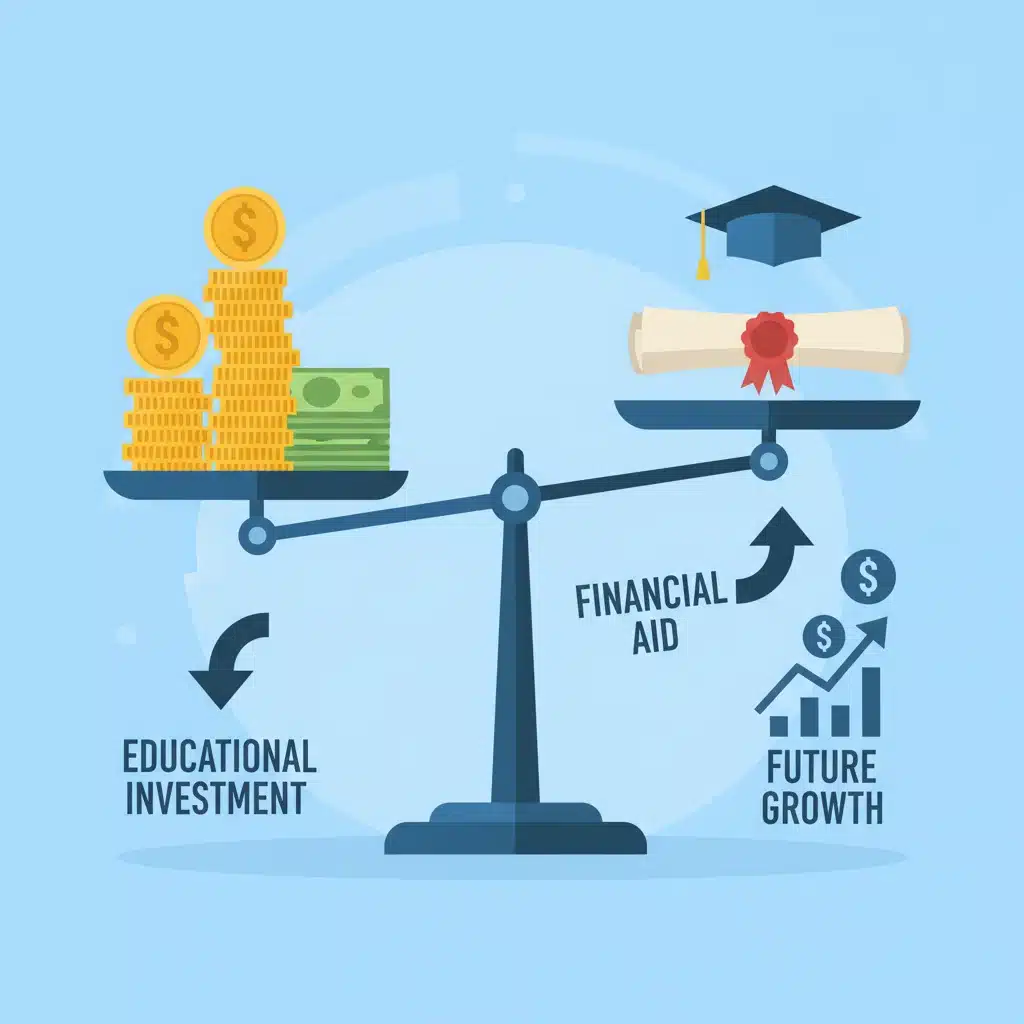
The new rules emphasize the importance of consistent reporting of enrollment status by institutions and may refine how certain components of the COA are calculated. The COA is a critical figure, as a student’s financial need is determined by subtracting their SAI from their COA. Therefore, any changes to how COA is defined or calculated can directly impact the amount of aid a student is eligible for.
Implications for Enrollment and COA:
- Consistent Enrollment Reporting: Institutions will have clearer guidelines for reporting student enrollment status.
- Refined COA Components: The calculation of specific COA elements may be updated, potentially affecting overall need.
- Impact on "Need-Based" Aid: Since need is COA minus SAI, changes to either component will affect a student’s aid package.
Students and families should understand that the COA is not just tuition; it includes living expenses, books, transportation, and other costs. How these are factored into the overall calculation, under the new 2026 FAFSA changes, can be crucial for determining total aid eligibility.
Preparing for the 2026 FAFSA: A Proactive Approach
Given the extensive 2026 FAFSA changes, a proactive approach is essential for all prospective applicants. Waiting until the last minute to understand these updates could lead to missed opportunities or delays in receiving crucial federal student aid. Here’s how you can prepare:
- Stay Informed: Regularly check the official Federal Student Aid (StudentAid.gov) website for the latest updates and guidance.
- Gather Documents Early: Even with a simplified application, you’ll still need tax information (for both students and parents, if applicable), bank statements, and records of investments. Start organizing these documents well in advance.
- Understand the SAI: Familiarize yourself with the concept of the Student Aid Index and how it differs from the EFC. Use online calculators or resources if available to estimate your potential SAI.
- Communicate with Your School’s Financial Aid Office: If you have specific questions about how these changes will impact your unique situation, especially regarding family farms, small businesses, or divorced parents, reach out to the financial aid office of the colleges you are considering. They are a valuable resource.
- Provide IRS Consent: Be prepared to provide mandatory consent for the direct data exchange with the IRS. This will be a non-negotiable step for federal student aid eligibility.
- Consider Professional Advice: For complex financial situations, consulting with a financial planner or a financial aid advisor can provide personalized guidance on navigating the 2026 FAFSA changes.
The goal of these changes is ultimately to make federal student aid more accessible and equitable. By taking the time to understand these updates, you can position yourself to maximize your eligibility and secure the financial support needed for your higher education journey.
Conclusion: Embracing the Future of Federal Student Aid
The 2026 FAFSA changes represent a significant evolution in how federal student aid is administered, aiming to simplify the application process, expand eligibility, and provide more targeted support to students in need. From the introduction of the Student Aid Index (SAI) to expanded Pell Grant opportunities and a more streamlined application, these updates are designed to make higher education more attainable for a broader range of students.
While change can sometimes feel daunting, these reforms are largely positive, addressing long-standing criticisms of the FAFSA system. By staying informed, preparing thoroughly, and utilizing available resources, students and families can successfully navigate these new waters. The future of federal student aid is geared towards greater accessibility and equity, and understanding the 2026 FAFSA changes is your first step towards unlocking the financial support you deserve for your educational aspirations. Don’t let these updates catch you off guard; empower yourself with knowledge and plan meticulously for the upcoming application cycle.